The short answer
Yes, with a plan. One crew can deliver photos and video from the same day, but rarely from the same second: stills want fast shutter speeds and often flash, while video wants motion blur, continuous light and quiet. Most hybrid shoots alternate photo and video blocks or run a photographer alongside the camera team.
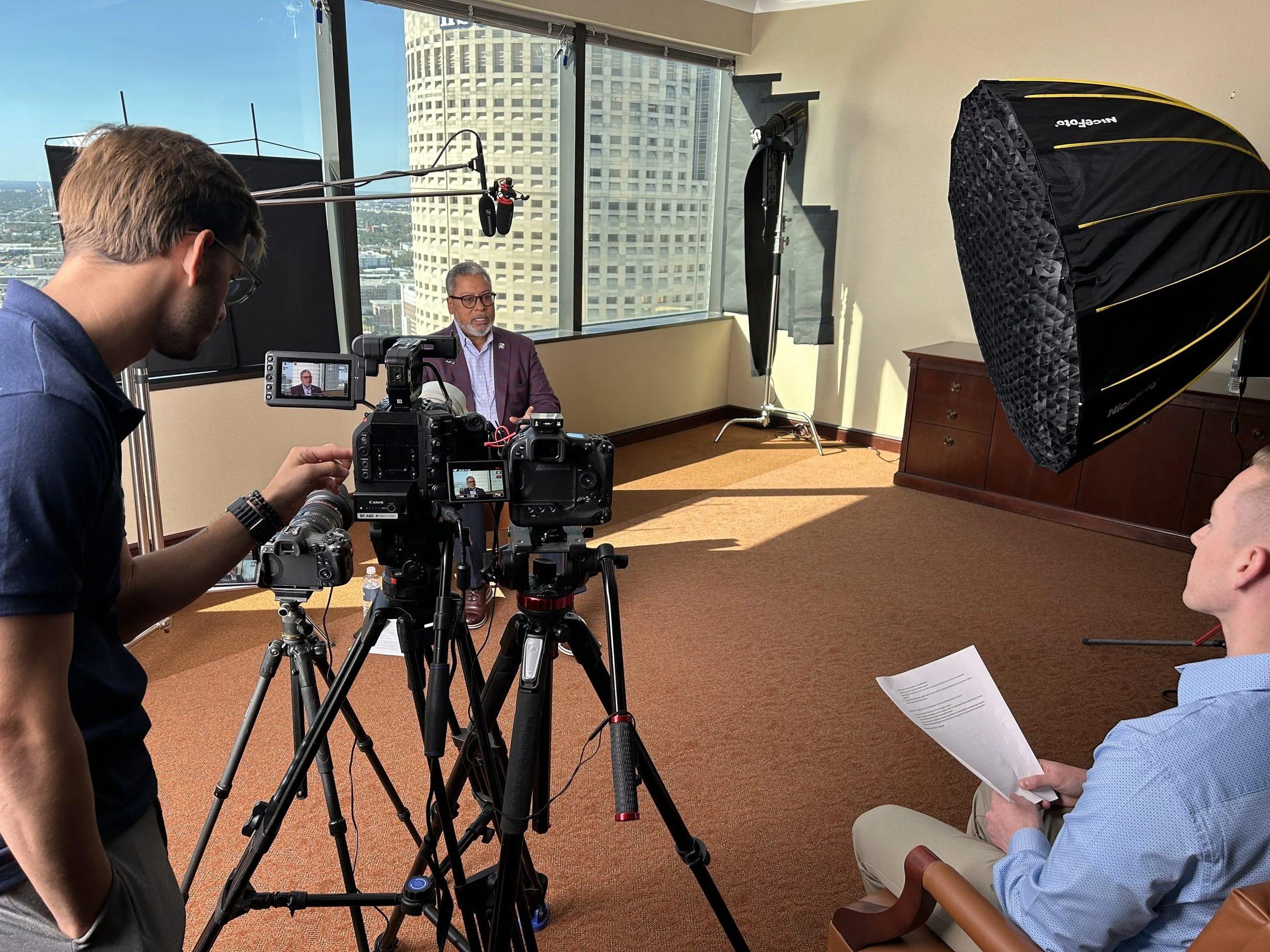
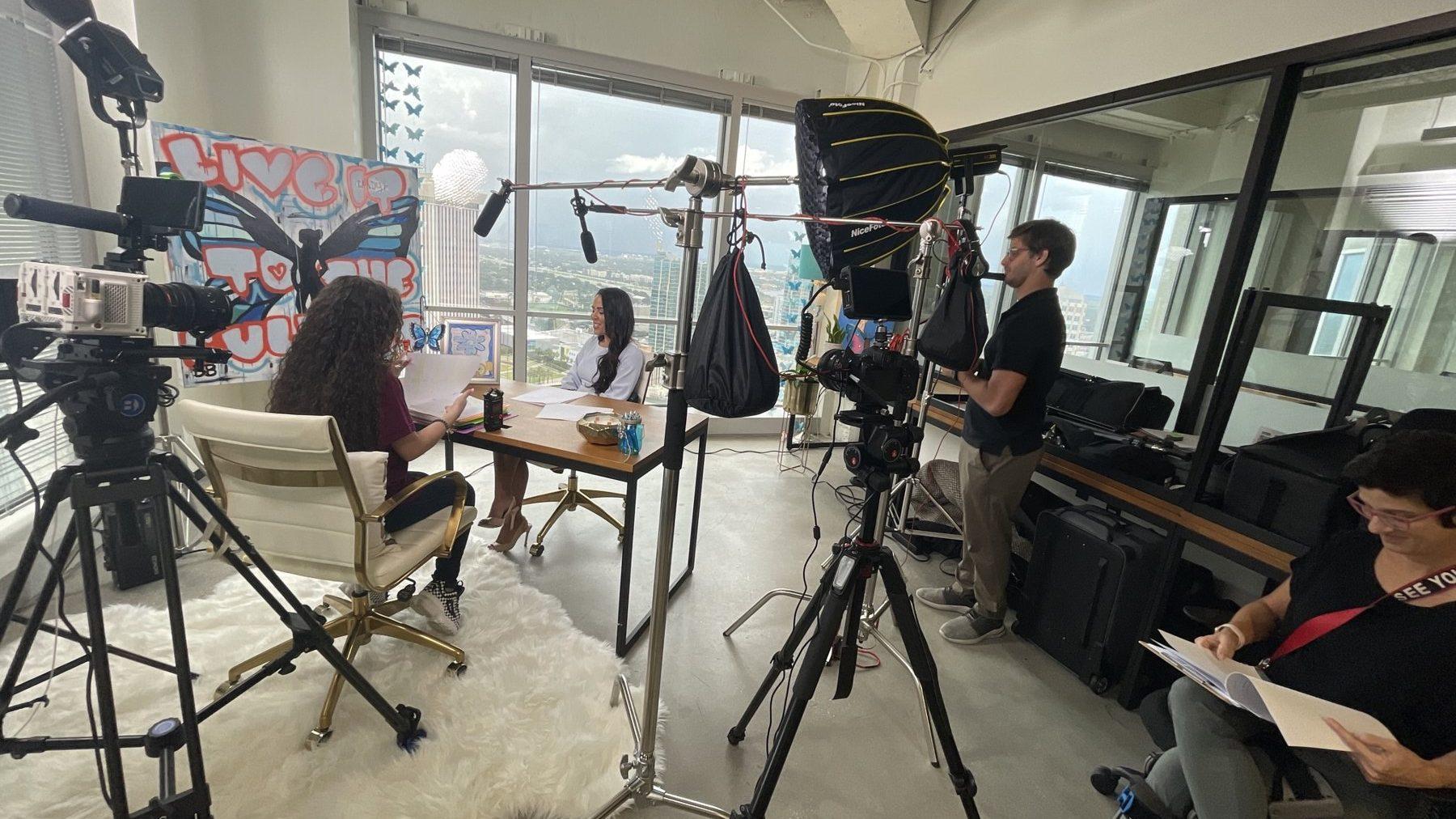
Yes, one crew can shoot photos and video on the same day, but rarely at the same instant. The two jobs want different shutter speeds, different light and different sound, so a good hybrid shoot either alternates dedicated photo and video blocks or runs a photographer alongside the camera team. Big Wave Productions, a national photo and video production company headquartered in Orlando, plans hybrid days around those conflicts from the first call.
The question usually comes from a marketing team that needs a recruiting video and new careers-page photos, or from a conference that wants a recap film and a full gallery. Here is how to get both without shortchanging either.
Three ways to get photos and video from one shoot
| Approach | How it works | Best for | Trade-off |
|---|---|---|---|
| Parallel | A photographer works alongside the video team all day | Conferences, events, busy days with lots of people | One more person on the crew, who has to stay out of shot and quiet during takes |
| Alternating blocks | The same set is used for video, then for stills, on a schedule | Interviews plus portraits, small brand shoots, a recruiting video with headshots | The day runs longer, or each block gets less time |
| Frame grabs | Stills are pulled from the video footage in post | Social posts, thumbnails, web sections | Lower resolution, motion blur, no flash, no retouched portraits |
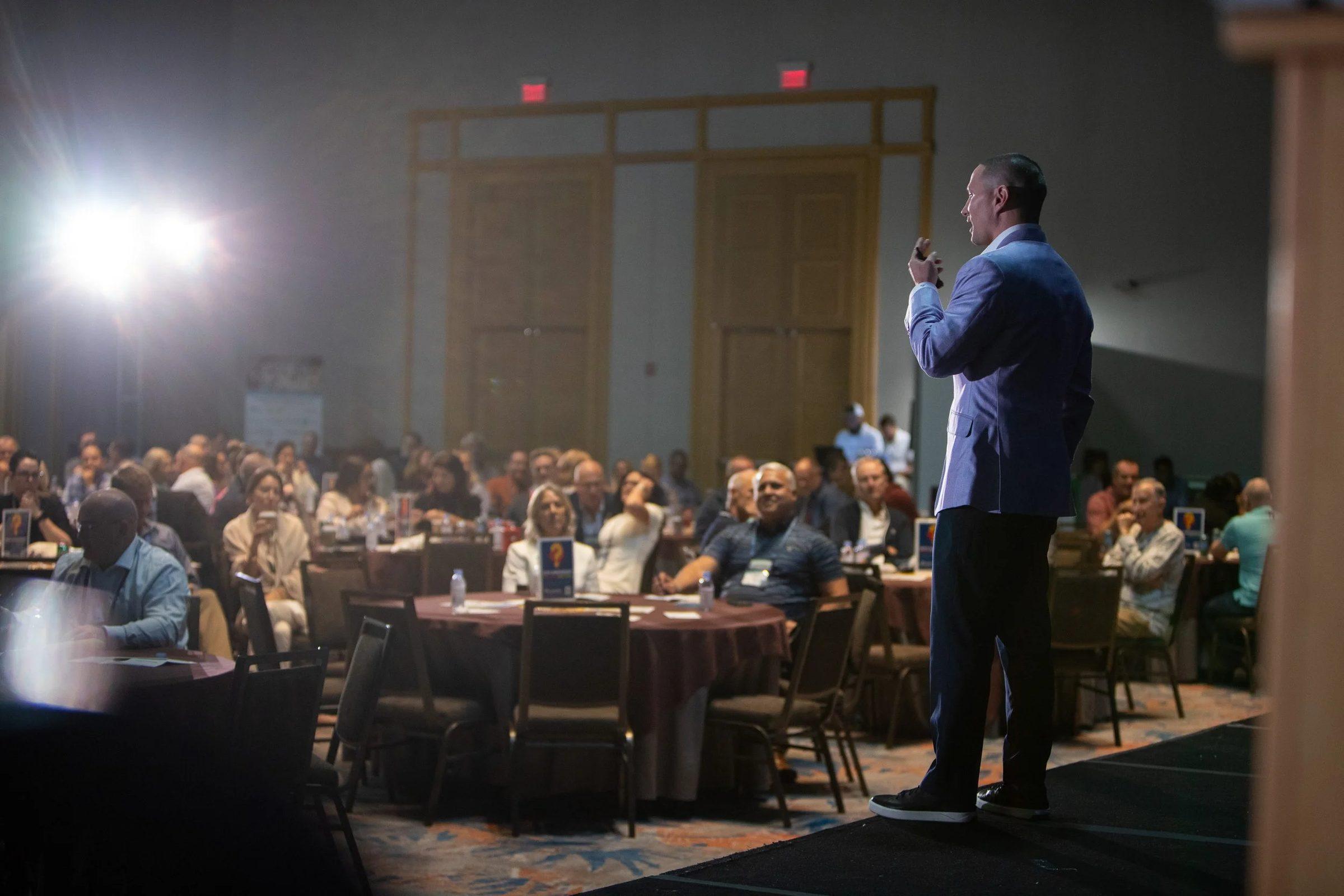
Events almost always need the parallel approach, because nobody can restage a keynote. At E-Scrap 2025 in Grapevine, Texas, one Big Wave crew delivered more than 500 edited event photos over three days alongside the recap film, session videos and greenroom interviews.
Why the two jobs collide
Shutter speed
Video looks natural with a little motion blur in each frame. RED describes a shutter angle near 180 degrees as by far the most common setting in cinema, equal to a shutter speed near 1/48 of a second at 24 frames per second (RED). At 30 frames per second the same rule works out to about 1/60.
A still of someone gesturing, walking or laughing usually needs a faster shutter than that to look sharp. Set the camera for one job and the other suffers. RED's guide notes that smaller shutter angles make frames look more like discrete images, which is good for a still and makes video motion look stuttered. Natural video motion, on the other hand, leaves individual frames soft.
Light
Photographers often light with strobes, which deliver a powerful burst for a fraction of a second. Video needs light that stays on. A strobe that fires while a video camera rolls spoils those frames, and RED notes that with a rolling shutter a strobe can light only part of the frame (RED).
Continuous lighting serves both, so a hybrid set usually starts there. The trade-off is power. Without a strobe's burst, the photographer may need a higher ISO or a wider aperture, which is why formal portraits often get their own strobe-lit block after the video team clears the set.
Sound
A mechanical shutter click lands right in the middle of an interview recording. During takes, the photographer waits, works from far enough away that the microphone can't hear it, or switches to a silent electronic shutter. Electronic shutters read the sensor line by line, the same rolling readout RED describes, where fast-moving subjects can look angled or sheared. For a seated interview subject that rarely matters. For a speaker pacing the stage, it can.
Framing and position
The photographer's best angle is often exactly where the video camera already stands. Move beside the lens and the subject's eyes start drifting to the wrong person. Stills are also composed for different crops than a 16:9 or 9:16 video frame. Agree on positions before each setup, so neither person ends up in the other's shot.
Direction
People on camera can follow one director at a time. If the photographer asks for a smile while the video director is mid-take, both lose the moment. Decide who directs each block, and have the other person work quietly around it.
Frame grabs vs real stills
A frame grab is a still pulled from video, and the pixel count sets the limit. A 4K UHD frame is 3,840 by 2,160 pixels, about 8.3 megapixels. A 6K frame at 6,144 by 3,240 is about 20 megapixels. We capture in 4K and 6K on RED and Canon cinema cameras, and the higher resolution leaves more room for grabs and reframing.
Frame grabs work well for:
- Social posts and carousel images
- Website section images and blog headers
- Video thumbnails and email headers
- Internal presentations
They fall short for:
- Large prints, banners and trade show graphics
- Retouched portraits and headshots
- Moments where fast motion has to be frozen sharp
- Anything that needs flash
If grabs are a planned deliverable, film those moments as their own setup: a faster shutter, a held pose and a locked-off frame. Then they are photographs that happen to come from a cinema camera, rather than stills rescued in the edit. A side benefit is that grabs carry the film's color grade, so they match the video exactly.
How to schedule photos and video on one day
Here is a sample corporate day with a two-person video team and one photographer working in parallel.
| Time | Video team | Photographer |
|---|---|---|
| 8:00 a.m. | Lights the interview set | Building exteriors, if the morning light suits the facade |
| 9:00 a.m. | First executive interview | Holds, or shoots quiet frames from behind the camera between questions |
| 9:45 a.m. | Resets for the next guest | Portrait of the first executive on the interview set, while they are lit and dressed |
| 10:15 a.m. | Second interview | Builds a headshot station in a separate room |
| 11:00 a.m. | B-roll of teams at work | Headshots by department |
| 12:00 p.m. | Lunch | Lunch |
| 1:00 p.m. | B-roll continues, vertical setups | Shoots the same work scenes from angles outside the video frame |
| 2:30 p.m. | Exterior and aerial b-roll | Office interiors and details |
| 3:30 p.m. | Pickups | Team group photo |
A few rules make the schedule work:
- Portraits follow interviews. Each person is already lit, dressed and warmed up, so a short photo block right after the interview costs almost nothing.
- The photographer works the b-roll scenes. The people are already doing the activity. Agree who shoots when, so neither shows up in the other's frame.
- Headshots get their own room and lights. The interview set never waits on a headshot line. Our guide to on-site corporate headshots covers space and timing.
- The shot list marks every item photo, video or both. That one column prevents duplicate coverage and gaps.
For the photo side of the list, our guide to business photography for companies covers which images a company actually uses. For the video side, see how many videos you can get from one shoot day.
When you need a separate photographer
Bring in a dedicated photographer when any of these apply:
- Events and conferences, where the keynote, the award and the ribbon cutting happen once.
- Interview-heavy days, where audio has to stay clean for hours.
- Headshots or portraits at volume. They need their own lit station, and every portrait Big Wave delivers is professionally retouched.
- Campaign stills for print, packaging or large displays, where resolution and lighting control matter most.
- Tight schedules, where a photo block would steal time the video plan needs.
One hybrid shooter is often enough for behind-the-scenes content, a single location filmed mostly as b-roll, or quick social updates.
What a combined shoot saves, and what it costs
Booking both on one production saves:
- People's time. Executives and employees give up one day instead of two.
- Logistics. One wardrobe plan, one set of locations, one access request to facilities.
- Paperwork. Releases can cover both photos and video if your counsel drafts them that way.
- A matching look. The same faces, clothes and color across the film and the stills, which matters for campaigns. Our guide to how a commercial brand shoot works covers that side.
- Pre-production. One planning cycle instead of two.
It costs a longer day or one more person on the crew, more data to manage, and more post-production, since photos need retouching while the video is being edited. Big Wave quotes each combined shoot after a discovery call.
Questions to ask before you book a hybrid shoot
- Who shoots stills while video is rolling, or does one side wait for the other?
- What lighting will the set use, and will portraits get their own strobe block?
- How many edited photos should we expect, and by what date?
- Are portraits and headshots retouched?
- Are frame grabs a planned deliverable or an occasional bonus?
- Does the license cover photos and video for every use we plan?
Plan both on one shoot
Send us the list of photos and videos you need, and we will tell you whether one crew can cover it or whether the day needs a dedicated photographer. Our commercial photography page shows the stills side of the work. Then book a discovery call with Brian or call or text the office at 407.498.5980.
Sources
- RED Digital Cinema, Shutter Angles and Creative Control
- RED Digital Cinema, Global and Rolling Shutters