The short answer
It depends on the kind of day. An interview-led brand film day usually produces one main film plus cutdowns. A tightly planned social content day can produce a dozen or more short videos when talent and sets stay put. A testimonial day produces one story per customer. Locations, lighting changes and approvals decide the final count.
One shoot day can produce one polished film, a dozen or more short social videos, or two or three customer stories, depending on what kind of day it is and how well it is planned. Big Wave Productions, a national photo and video production company headquartered in Orlando, plans each shoot day backward from the deliverables list, because the number of finished videos is decided in pre-production, not on set. Here is how to estimate the count for your own day.
The short answer by type of day
| Type of day | Main output | What else it can produce | What limits the count |
|---|---|---|---|
| Interview-led brand film | One main film | Cutdowns for ads and social, interview soundbites, a b-roll library | Interview length, location moves, the b-roll the story needs |
| Social content day | Many short videos | Behind-the-scenes clips, stills of the same people | Script approvals, wardrobe changes, stamina of the people on camera |
| Testimonial day | One story per customer | Short quotes for ads, photos of each customer | Customer availability and travel between their sites |
| Event day | Scales with the crew | Recaps, interviews, session recordings, photos | Crew size and the agenda |
Brand film days
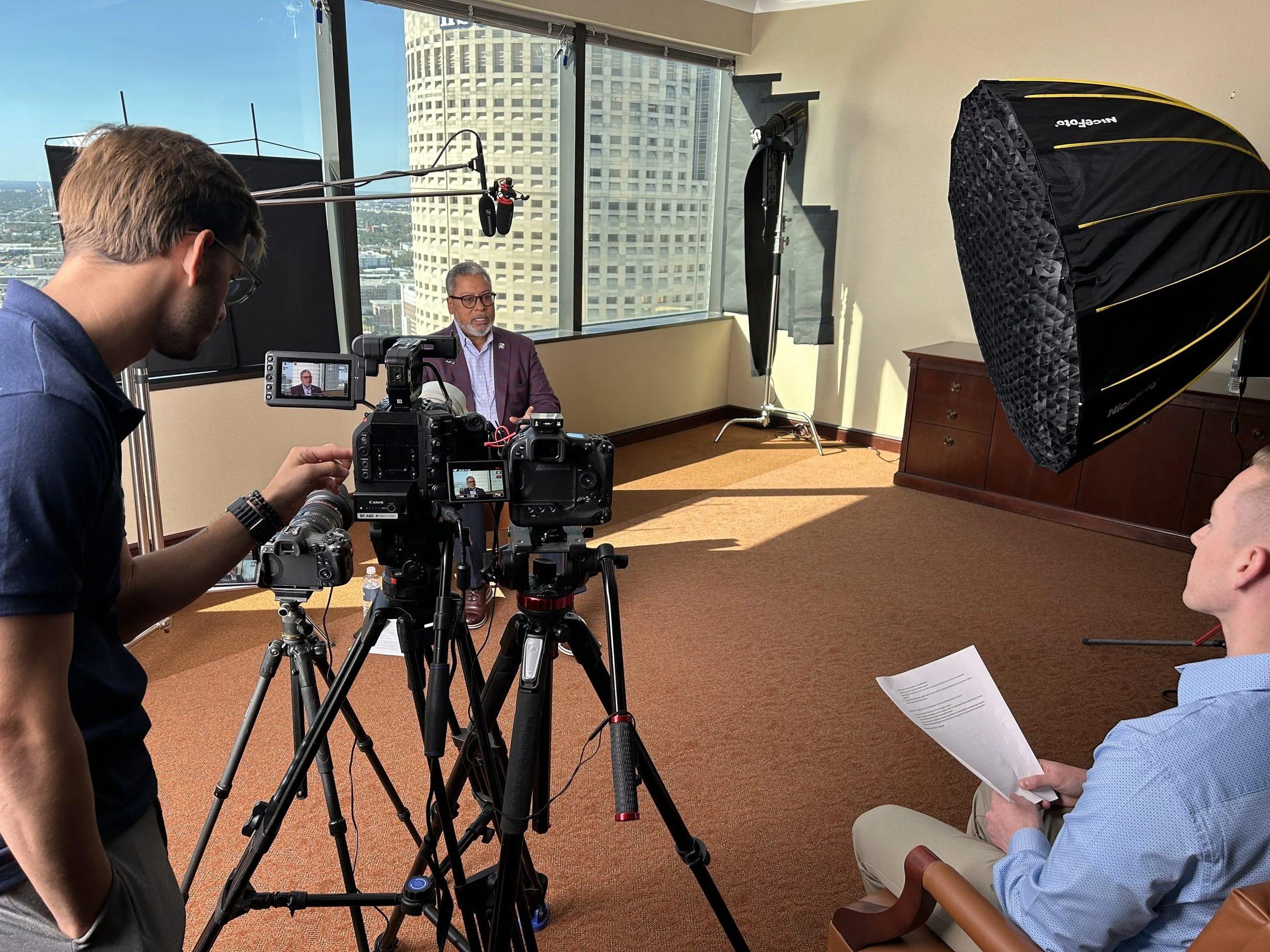
A brand film day spends most of its hours on one story: two or three interviews, the b-roll that proves what they say, maybe an aerial of the building. The output is one main film, but a planned day also produces its cutdowns. If paid video is part of the plan, check the ad formats before you shoot. Google Ads lists bumper ads at 6 seconds and non-skippable in-stream ads at 15 to 60 seconds depending on the campaign subtype (Google Ads Help), so the shot list should include moments that work at those lengths.
Count placements, too, not only files. For SouthState Bank's Tampa headquarters at Rivergate Tower, one film was shared on the bank's website and social channels, played at the grand opening and kept running on the headquarters display afterward. One video, four places it earned its keep.
Social content days
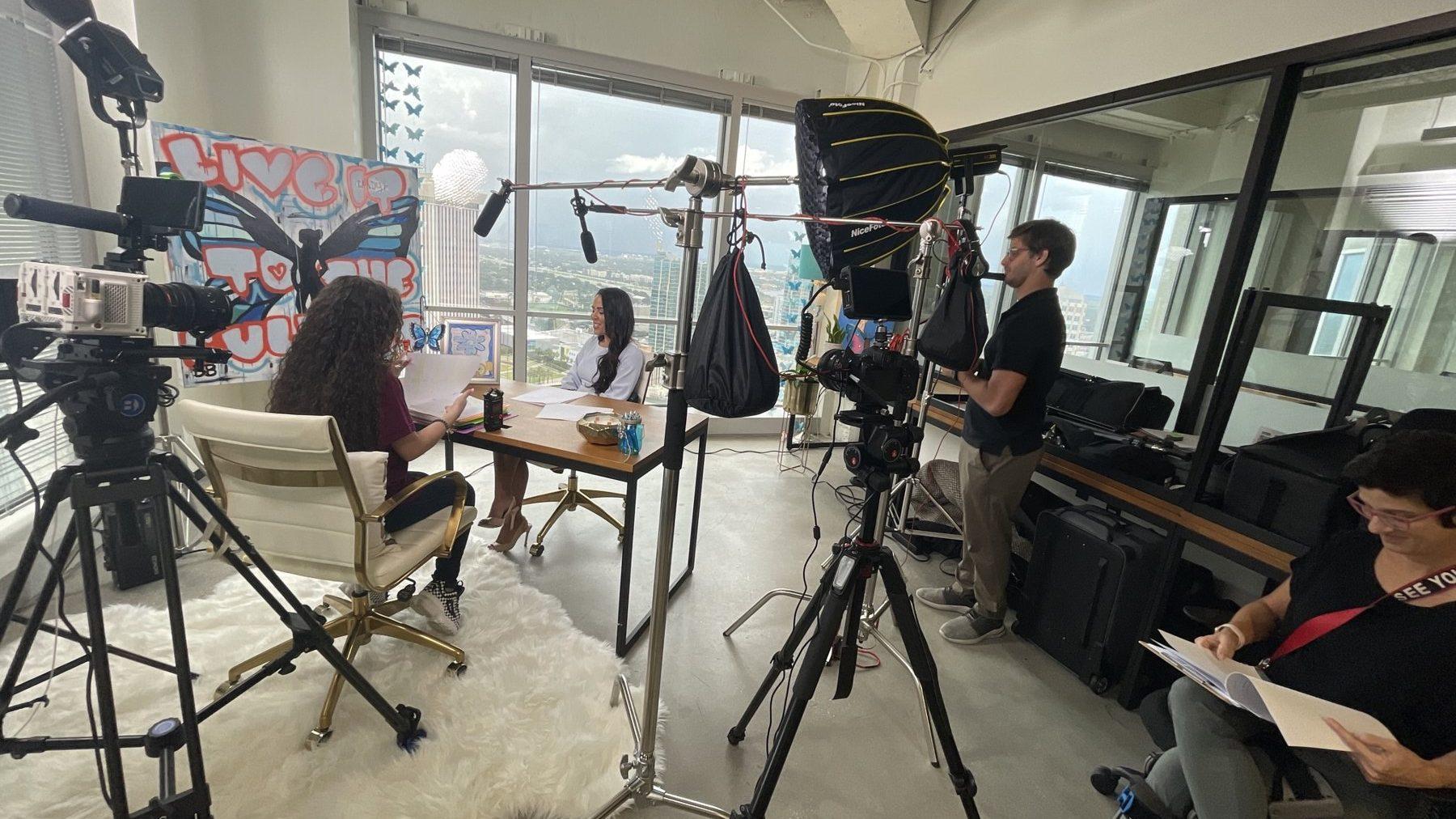
A content day is built for volume: short videos, each carrying one idea, filmed in batches. The math is simple. Take the hours the camera can actually roll, then divide by the minutes each video needs on set, including resets and a safety take.
- Six hours of rolling time at 25 minutes per video holds about 14 videos.
- At 40 minutes per video, which is closer to reality when every piece needs a new setup, it holds 9.
Approved scripts are the biggest multiplier. Someone reading an approved script from a teleprompter can deliver several pieces in an hour. Someone improvising while three stakeholders rewrite lines behind the monitor may deliver one. Keep each piece to a single point, too. YouTube Shorts can run up to three minutes (YouTube Help), but a content day built on three-minute pieces holds far fewer of them.
Testimonial days
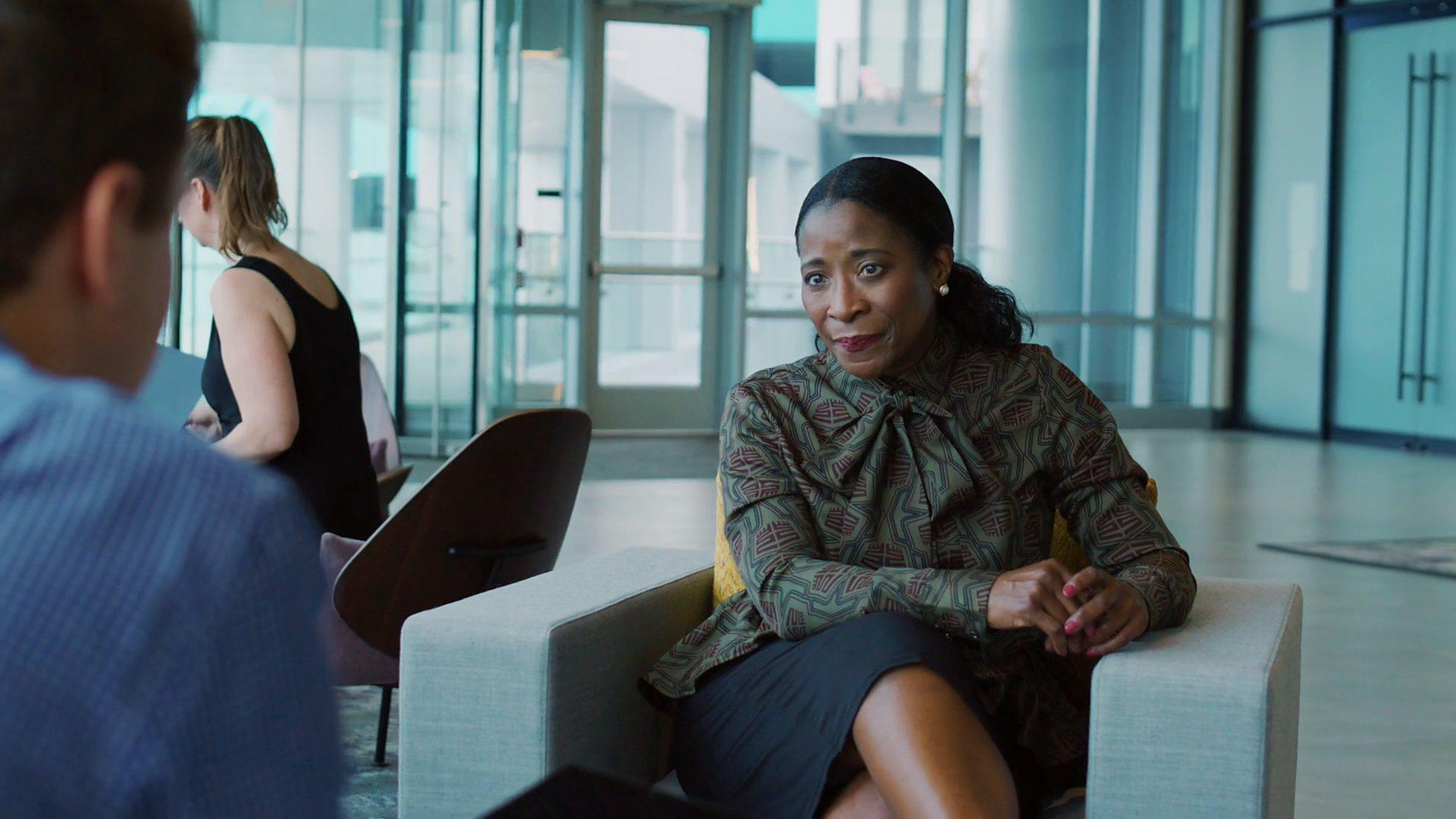
Each customer is a separate story with their own interview and their own b-roll, usually filmed where they work. Two or three customers in one day is a realistic plan when they come to a single location. When the crew films at each customer's business, plan on fewer, because every trip is a full load-out, drive and relight.
Event days
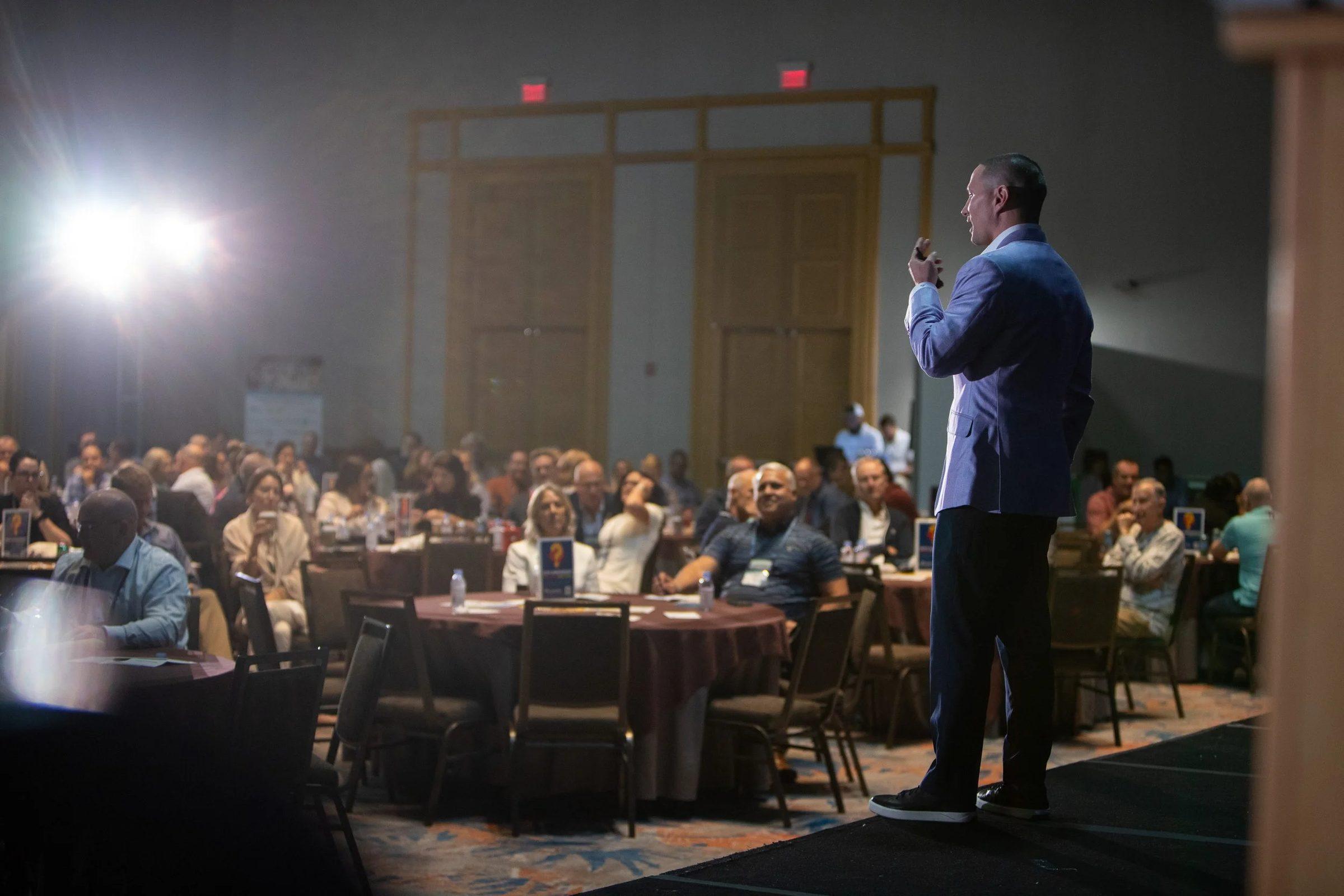
Event output scales with how many people are on the crew and how many things happen at once, rather than with how long one camera can roll. At E-Scrap 2025 in Grapevine, Texas, one Big Wave crew delivered six full session and plenary videos, 15 greenroom interviews, 10 social promo videos, three same-day recaps and a full recap film over three days, plus more than 500 edited photos and staff headshots. That is 35 finished videos from a three-day event.
What eats time on a shoot day
The camera rolls for less of the day than most people expect. These are the usual culprits:
- Company moves. Every relocation means lights come down, gear travels, and the new space gets lit and checked for sound. A move across the building can cost as much time as filming two short videos. A move across town adds parking and a second load-in.
- Lighting changes. Exteriors follow the sun, and window light shifts through the day. An interior set that matched at 9 a.m. may need relighting by 2 p.m.
- Wardrobe changes. A different outfit per video makes a batch of clips feel like separate days, but every change costs time and a fresh microphone fitting.
- Approvals on set. A new stakeholder at the monitor rewriting lines is the single biggest drain on a content day. Approvals belong in the week before the shoot.
- People's calendars. Executives arrive late and leave early. Build their slots with a buffer, and keep b-roll ready to film when a meeting runs over.
- Sound. Air handlers, leaf blowers, overhead pages and flight paths all force pauses, and the pauses add up.
- Touch-ups. Hair, makeup and a fresh shirt matter more on hot days and under lights.
A sample content-day schedule
Here is a one-building content day with two people on camera and three sets.
| Time | Set | What gets filmed | Output |
|---|---|---|---|
| 7:30 a.m. | Load-in | Crew arrives, builds and lights Set A | |
| 8:30 a.m. | Set A, an office with interview lighting | Person 1 reads four approved scripts | 4 short videos |
| 10:00 a.m. | Set A | Person 2 reads three scripts, then changes for a fourth | 4 short videos |
| 11:30 a.m. | Set B, the lobby or main floor | Walk-and-talk with Person 1, framed vertical | 2 short videos |
| 12:30 p.m. | Lunch | ||
| 1:15 p.m. | Set C, a conference room | Crew lights a two-person conversation setup | |
| 1:45 p.m. | Set C | Both people in a conversation format | 2 short videos |
| 2:45 p.m. | Around the building | People at work, products, signage, exterior details | B-roll library |
| 3:45 p.m. | Set A | Stills of both people for posts and thumbnails | Photos |
| 4:30 p.m. | Wrap | Load-out and footage backup |
That day produces 12 short videos, a b-roll library and stills of the same people. Notice the order. Videos are grouped by set and by person, not by topic or by the order they will post. If you need photos too, our guide to shooting photos and video on the same day covers how to fit both without slowing the camera.
How to plan deliverables before the day
The count is set before anyone loads a truck. Work through these steps:
- Write the deliverables list first. Every item gets a length, an orientation and the place it will run. Orientation changes framing on set, so decide it now. Our guide to vertical, horizontal and square video explains why.
- Write one page per video. A script or a short outline, with the name of the person delivering it.
- Finish approvals before the shoot. Marketing, leadership and compliance sign off on scripts the week before, not at the monitor.
- Group by person and by set. Build the schedule around who is on camera and where, then slot the videos into it.
- Name one decision-maker on set. One person answers "is that take good enough?" so the day keeps moving.
- Keep a buffer. Leave an open block late in the day for retakes and the shot someone remembers at 3 p.m.
A clear brief makes all six steps faster. Start with our guide on how to write a video production brief, then use the checklist in how to prepare for a corporate video shoot.
When to book two days instead of one
- The locations are far apart. Two sites across a metro area can eat half the day in moves.
- Exteriors need both ends of the day. Morning and evening light rarely fit around a full interview schedule.
- A hero film and a content day share the calendar. Each deserves the crew's full attention, and cramming both into one day shortchanges both.
- Key people are only free on different days.
- The math doesn't fit. If the rolling time divided by minutes per video comes up short, add a day rather than rushing every take.
More videos is not the goal
A shoot day is worth what you publish from it. Twelve clips that sit in a folder are worth less than four that run all quarter. Start from your posting calendar and work backward to the number of pieces you can actually release. For banks and financial institutions, our guide to how many videos a bank needs in a year turns that calendar into shoot days.
Plan your shoot day
Send us your deliverables list, even a rough one, and we will tell you whether it fits in one day or needs two. Our social media video page shows how content days come together. Then book a discovery call with Brian or call or text the office at 407.498.5980, and we will build the schedule with you.
Sources
- Google Ads Help, About video ad formats
- YouTube Help, Upload YouTube Shorts