The short answer
A small business client story is a short documentary about one business owner and the banker who helped them grow, filmed where the business actually runs. Big Wave Productions plans these around a pre-interview, a half day at the business, and a compliance review of anything that mentions rates, terms or results.
A small business client story is the most persuasive video a commercial banking team can make, because it shows a real owner and the banker who helped them, in a place prospects recognize. The format is simple: one business, one relationship and the turning point that connects them, filmed where the work happens. Big Wave Productions films these stories for bank business banking teams, and the plan below, from choosing the business to clearing compliance, is how we get months of content out of a single half-day shoot.
Why client stories work for business banking
Business owners choose a bank for the banker as much as the bank. They want to know who will pick up the phone when the equipment loan has a wrinkle or the line of credit needs to grow before a busy season. A brand spot can't answer that. A two-minute film of a contractor, a restaurant owner or a family manufacturer talking about the person who helped them can.
These stories also travel well inside the bank. Relationship managers send them to prospects, leadership plays them at kickoffs, and recruiting uses them to show what the job looks like. One shoot can feed the website, LinkedIn, email, paid social, branch screens and the next annual meeting.
We wrote more about this storytelling-first approach in Stop copying Chase, and the same idea applies here: the stories that belong only to your bank are the ones worth filming.
How to pick the right business
Not every happy client makes a good video. Look for these five things:
- A specific turning point. A second location, a building purchase, a payroll crunch, an SBA loan that let them hire. Specifics give the story shape.
- An owner who talks easily. Not polished, just comfortable. The pre-interview tells you quickly.
- A banker in the story. The owner should be able to name the person who helped and say what they did.
- Something to see. Kitchens, shop floors, job sites, boats, delivery routes. Work in motion beats an office.
- A business your prospects recognize. Local names and familiar places help viewers picture themselves in the story.
It also helps to pick businesses across your footprint and industries, so a series doesn't look like it was filmed on one street.
What to film
Plan for a half day at the business, sometimes a full day if the owner and banker are filmed separately. A typical shot list looks like this:
| Element | What it captures | Why it matters |
|---|---|---|
| Owner interview | The story in their words: before, the turning point, after | The spine of the edit |
| Banker interview (short) | How the relationship works from the bank's side | Shows who prospects would actually call |
| Owner and banker together | A walk-through of the business, a real conversation | Proves the relationship is real |
| Work in progress | Hands, tools, customers, the product being made | Keeps the edit visual |
| Exterior and signage | The storefront, the trucks, the neighborhood | Places the story in your market |
| Details | The first dollar framed on the wall, the new equipment | Small proof points that stick |
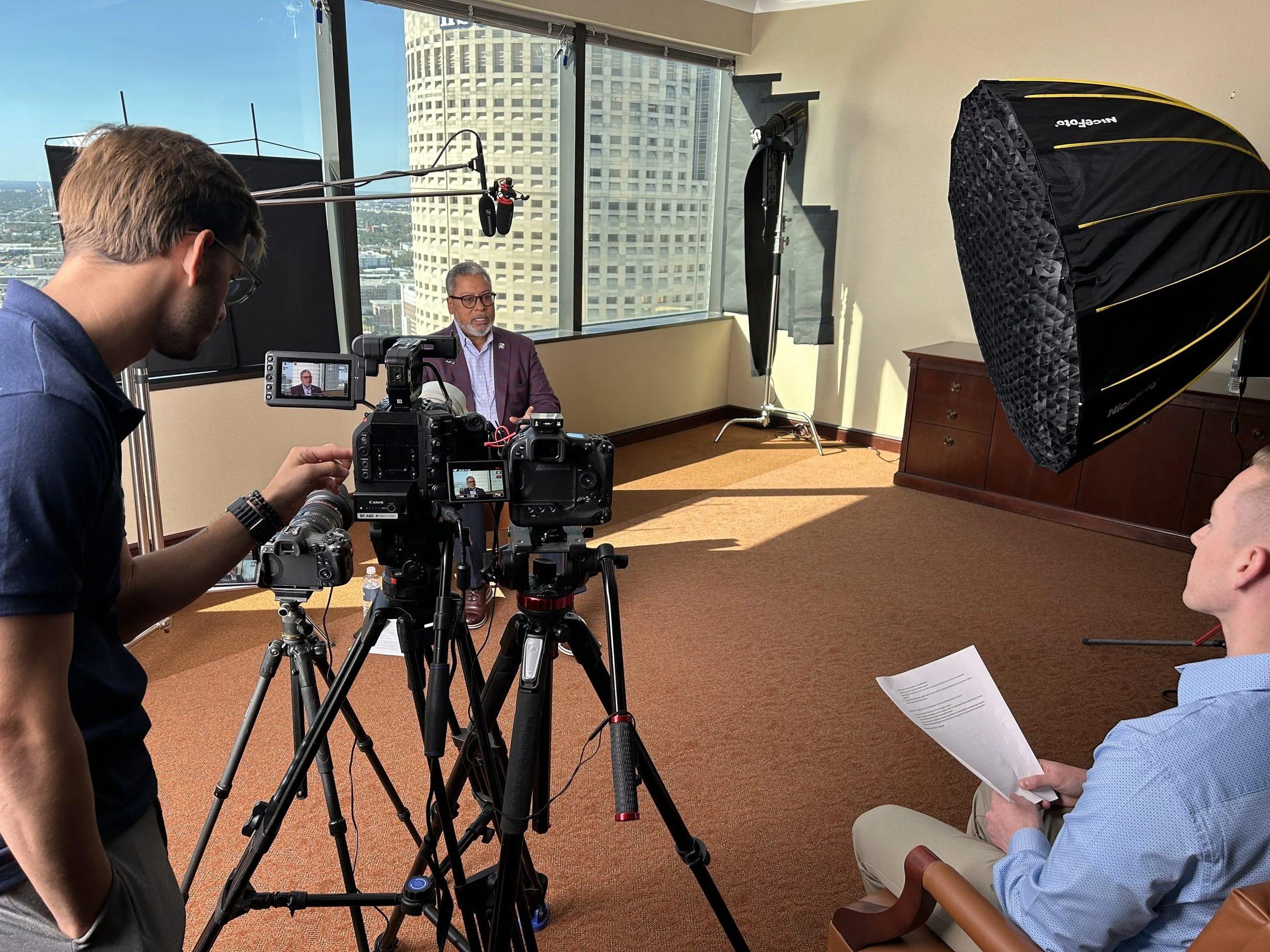
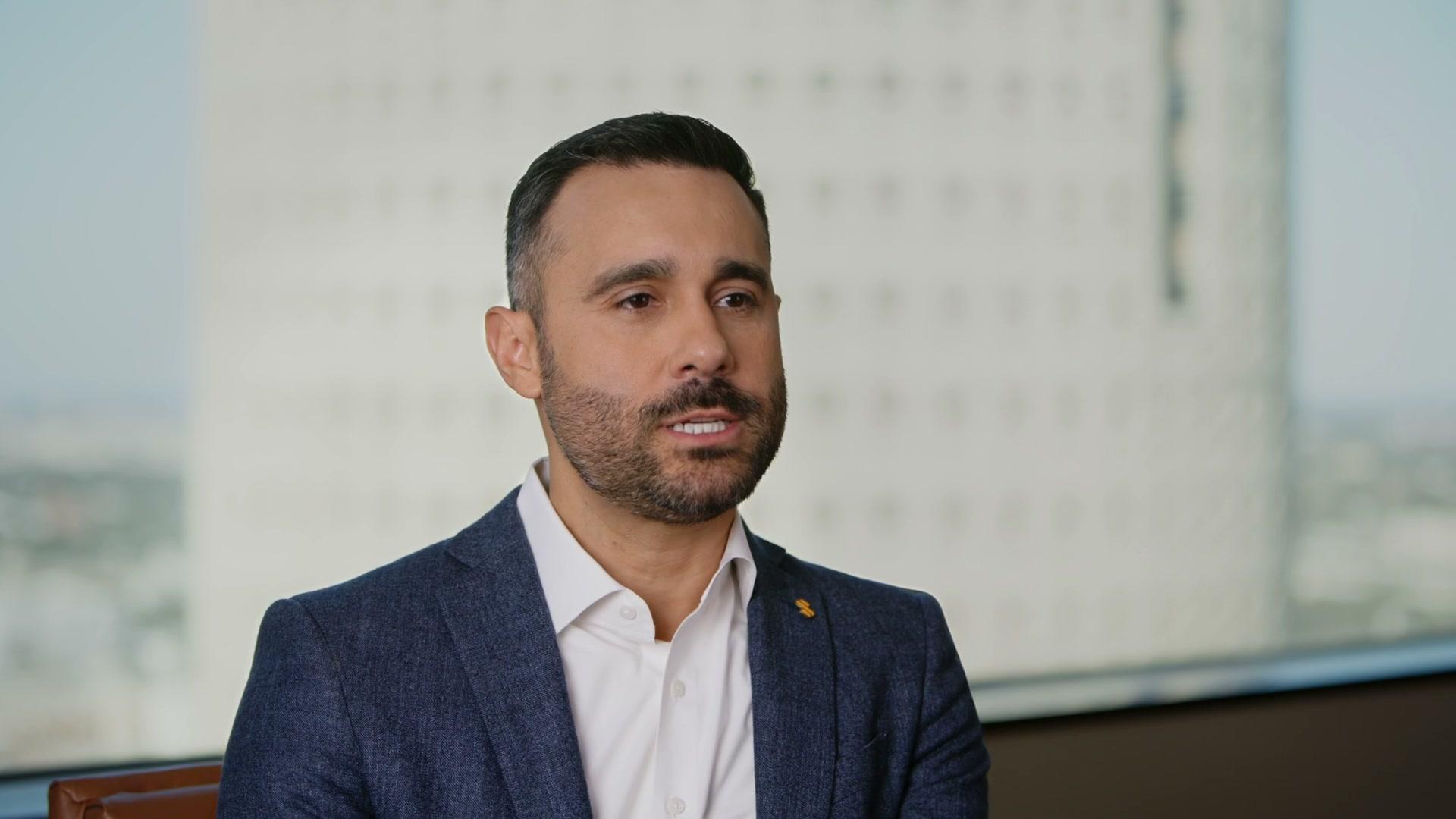
We light interviews on location so the business looks like itself, just better. For multi-camera interviews we usually run a wide and a tight angle, which also gives the editor room to cut short social versions cleanly. Our customer stories page goes deeper on interview technique.
The interview: questions that get stories
Owners give generic answers to generic questions. Ask for moments instead:
- Tell me about the day you knew you needed a bigger space.
- What were you worried about before you called the bank?
- Who did you talk to, and what did they do first?
- What does the business look like now that it didn't look like then?
- What would you tell another owner in your spot?
Avoid asking the owner to praise the bank. Ask what happened, and the praise shows up on its own, in words that sound like them.
What compliance usually reviews
Client stories are testimonials, so plan for review. Every bank's process is different, and your compliance team makes the calls. In our experience these are the items reviewers look at most:
- Rates, payments and terms. If the owner mentions a rate or a payment, disclosure rules under Regulation Z or Regulation DD may apply, and many banks simply keep specific numbers out of the edit.
- Implied guarantees. Lines like "they'll approve anyone" or "you'll get the same deal" get cut.
- Endorsement context. Reviewers check that the story reflects the client's real experience and that any relationship beyond being a customer is clear, in line with the FTC's Endorsement Guides.
- Releases. Signed appearance releases for the owner, employees on camera and the property.
Our bank video compliance checklist covers these in more detail, with links to the regulations. We plan review windows into the schedule so approvals don't push the launch.
Getting the client to say yes
The banker who owns the relationship should make the ask, in person or on the phone, not through a marketing email. Make it easy:
- Explain the time: usually a half day, scheduled around their busiest hours.
- Send a one-page overview of what we'll film and a sample of the finished style.
- Offer them a version they can post on their own channels. Owners value that more than you'd expect.
- Share the release before the shoot, not on the day.
How to use one shoot for months
A single client story should produce more than one video. A typical package:
- A 90-second to two-and-a-half-minute story for the website and LinkedIn
- Two or three 15 to 45 second vertical cuts for social and paid campaigns
- A quote card set and stills for email and print
- A short version for branch screens, captioned for viewing without sound
- A cut for relationship managers to send to prospects in the same industry
If you plan a series, three to four businesses filmed over two or three days in the same market is the most efficient way to build a library. Our bank video production cost guide explains how batching shoot days changes the budget.
Start with one story
The first client story is the hardest, because it sets the template. After that, relationship managers start bringing you candidates. If your commercial banking team has a few clients in mind, a short discovery call is usually enough to pick the strongest one and plan the shoot. See how we approach bank video production, or book a call with Brian.
Sources
- Consumer Financial Protection Bureau, Regulation Z, 12 CFR 1026.24 (Advertising).
- Consumer Financial Protection Bureau, Regulation DD, 12 CFR 1030.8 (Advertising).
- 16 CFR Part 255, FTC Guides Concerning Use of Endorsements and Testimonials in Advertising.