The short answer
Hire a freelancer for a defined job that one or two skilled people can cover. Hire an in-house videographer when you need steady weekly content from the same few locations. Bring in a production company when a project needs planning, a coordinated crew, travel or a fixed deadline. Many marketing teams combine in-house staff with an outside crew.
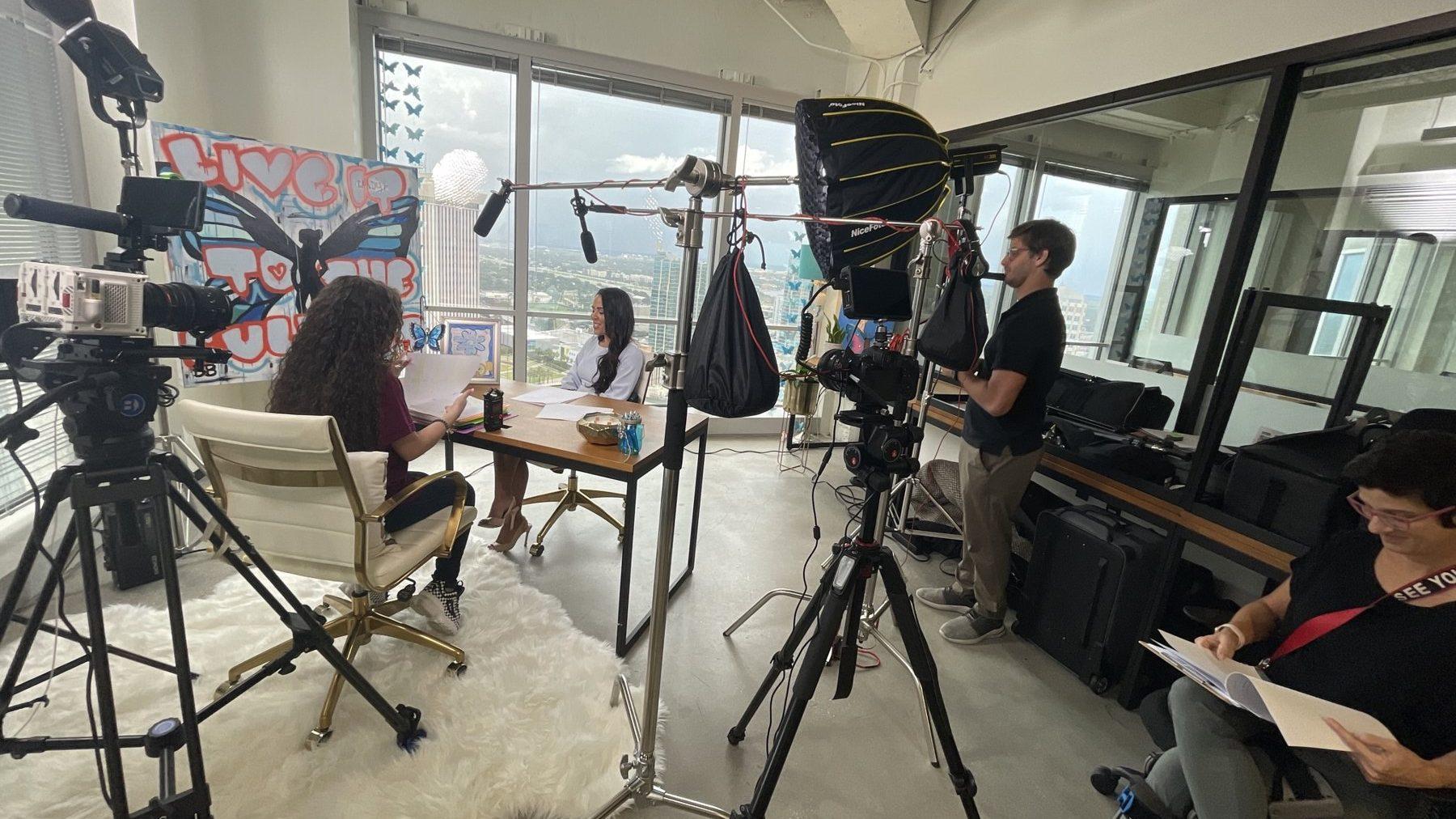
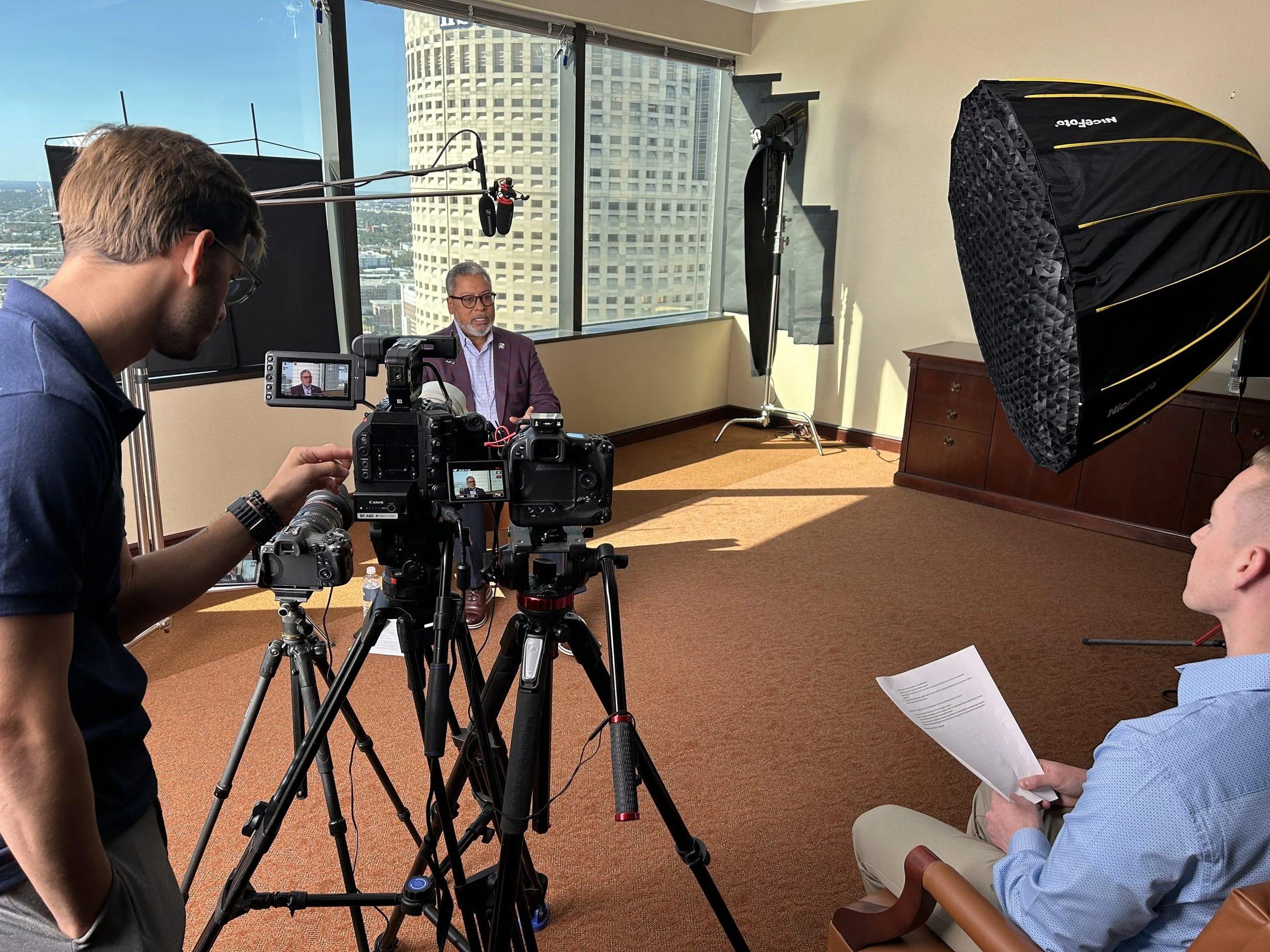
Hire a freelancer when the job has clear edges and one or two skilled people can cover it, and an in-house videographer when you need steady content every week from the same few places. Bring in a production company when the project needs planning, a coordinated crew, travel or a date that can't move. Big Wave Productions, a national corporate video production company headquartered in Orlando, works in all three arrangements: running a project end to end, serving as an outsourced production department, or plugging into an in-house team for the big days.
None of these options is the "right" one in general. Each is right for a certain kind of work, and the mistake we see is choosing a model for the next video instead of for the next twelve months.
Three models, three ways of paying
The freelance videographer
A freelance videographer is an independent professional you hire directly, usually by the day or the project. Many shoot and edit. Others specialize in camera, audio or editing. Freelancers are a large share of this workforce. In the Bureau of Labor Statistics profile of film and video editors and camera operators, self-employed workers make up 35 percent of each occupation, and the BLS notes that many videographers run their own business or freelance.
You pay for their time and their equipment. In most cases you also supply the production: what to film, who appears, where and when, and who approves the edit.
The in-house videographer
An in-house videographer is an employee on your marketing team. They learn your brand, your people and your buildings, and they're available when the CEO frees up twenty minutes on a Tuesday.
You pay for them whether the week is busy or quiet. For context, the BLS reports a May 2025 median annual wage of $74,990 for camera operators and $75,420 for film and video editors. Wages are only part of the cost of any employee. The BLS Employer Costs for Employee Compensation release shows benefits made up 30.0 percent of private industry employer compensation costs in June 2026. Then add cameras, lenses, lights, microphones, editing software, storage and the replacement cycle for all of it.
The production company
A production company is a producer-led team that owns a project from plan to delivery: creative development, scheduling, crew, gear, editing, color, sound, graphics and a file for every platform. You pay for the people the project needs plus the planning and post-production hours around the shoot day. That is why a production company's day costs more than one person's day.
For a public market reference, Clutch's Video Production Pricing Guide 2026, compiled from verified client reviews, says projects on its platform typically cost less than $10,000, reports an average of $42,280.92, and lists $100 to $149 per hour as the most common rate. Those are market ranges, not Big Wave prices. Big Wave quotes each project after a discovery call.
Freelancer, in-house or production company: side by side
| Freelancer | In-house videographer | Production company | |
|---|---|---|---|
| How you pay | Day or project rate | Salary, benefits, gear and software | A project quote covering planning, crew, gear and post |
| Who produces | Usually you | You and your videographer | A producer, with your input and approvals |
| People on a shoot day | One or two | One, unless you build a team | A crew sized to the job |
| Gear | Their own kit | What you buy and maintain | Cinema cameras, lighting, audio and specialty gear as needed |
| Speed on small requests | Depends on their calendar | Fastest. They sit down the hall | Best for planned work with a schedule |
| Consistency over time | Strong when you rebook the same person | Deepest brand knowledge | Strong when one team handles your work for years |
| Main risk | One person is a single point of failure | Fixed cost when demand drops, and turnover | Higher cost per day, and approvals still need your time |
| Best fit | Defined, single-skill jobs | Steady weekly content in one place | Big productions, travel, events and hard deadlines |
When a freelancer is the right call
A good freelancer is often the smartest hire for a job with clear edges. Book one when:
- You need a single-camera interview or a few hours of b-roll at your own office.
- Someone on your team can produce: write the plan, line up the people and run approvals.
- Your in-house editor needs extra hands during a busy quarter.
- You need pickup shots in a city where nobody on your team is based.
- One skilled person is genuinely enough for the job.
Ask early who covers the shoot if they get sick or double-booked. A backup plan is a normal question for anyone working solo. If a freelancer starts working for you every week, on your schedule and with your equipment, talk to HR about how that relationship is classified. The IRS looks at behavioral control, financial control and the type of relationship when it decides whether a worker is an independent contractor or an employee. That's a question for HR or your tax advisor, and this article isn't tax or legal advice.
When an in-house videographer is the right call
An in-house hire earns the salary when the work is steady. Here's a simple test: list every video you expect to make over the next twelve months. If that list keeps one person busy every week, mostly at your own locations, a hire makes sense.
In-house works best for:
- Weekly social posts, quick tips and reaction clips
- Internal communications and town hall recordings
- Same-week turnaround on small requests
- Teams with a marketing leader who can direct the work and protect the videographer's calendar
Plan for the limits too. One person can't run three cameras, light a set and monitor audio at once. They take vacations, and eventually they move on. Keep the footage library, project files and brand templates on company storage, not on a personal drive.
When a production company is the right call
Bring in a production company when the project needs more than one pair of hands, or more planning than your team has time for. Common signals:
- Several people on camera, multi-camera interviews, or lighting built for each scene
- Several locations, or a shoot in another state
- A fixed date, such as an opening, an annual meeting or a conference
- Executives, public officials or customers with short windows of availability
- A brand film or commercial that will carry your name for years
- Legal or compliance review that has to fit into the schedule
Conference coverage shows the capacity difference clearly. At E-Scrap 2025 in Grapevine, Texas, one Big Wave crew delivered 500+ edited event photos, a full-length recap film, six session and plenary videos, 15 individually edited greenroom interviews, 10 social promo videos, three same-day daily recap videos and staff headshots for Resource Recycling, all in three days. No single shooter covers that much ground. It takes a coordinated crew and a producer running the schedule.
The hybrid model: in-house plus an outside crew
For many marketing teams the answer is both. An in-house videographer, or a social media manager with a good phone, keeps the weekly rhythm going. An outside crew handles the days that carry the brand.
| Work | Who usually owns it |
|---|---|
| Weekly social clips, tips and reactions | In-house |
| Internal updates and event snippets | In-house |
| Brand film, commercial, headquarters or branch opening | Production company |
| Multi-camera interviews with executives or customers | Production company |
| Conference coverage across several rooms | Production company |
| B-roll library and graphics package | Production company builds it, in-house reuses it |
| Extra hands on a big in-house shoot | Freelancer or production company |
A few habits make the hybrid model work:
- Ask the outside crew to deliver a b-roll library, logo animations and lower-third templates your in-house editor can open and reuse.
- Settle ownership and raw footage in the contract. Our guide to usage rights and music licensing covers the terms to check.
- Share your color, type and caption style with everyone who touches the footage, so the weekly posts and the brand film look like the same company.
Big Wave fills either role: the outsourced production department that runs the whole project, or the crew that joins your in-house team or agency for the days that need more people and more gear.
Questions to ask before you hire anyone
- Who will actually be on set, and in which roles?
- Who edits, and who handles color and sound?
- What's the backup plan if someone gets sick?
- Can I see finished work for an organization like mine? Banks can use our criteria for choosing a bank video production company.
- What does the quote include: pre-production, travel, music, review rounds, captions, vertical versions? Our guide on how to compare video production quotes shows how to line those up.
- Who owns the footage, and do we receive the raw files?
- How does legal or compliance review fit into the schedule?
- If our venue or office requires a certificate of insurance, can you provide one?
- For an in-house hire: who will direct their work, and what equipment budget comes with the role?
Pick the setup for your next twelve months
Write down the video you expect to need over the next year, then choose the model that covers most of it and fill the gaps with the others. If a production company belongs in your mix, a short video production brief is the best way to start. See how we approach corporate video production, then book a free discovery call with Brian, call or text the office at 407.498.5980, or email brian@meetbigwave.com.
Sources
- U.S. Bureau of Labor Statistics, Occupational Outlook Handbook: Film and Video Editors and Camera Operators, May 2025 wage data and largest employers, page last modified August 27, 2026.
- U.S. Bureau of Labor Statistics, Employer Costs for Employee Compensation, June 2026, released September 9, 2026.
- Clutch, Video Production Pricing Guide 2026, average cost and hourly rates, page updated September 21, 2026.
- Internal Revenue Service, Independent contractor (self-employed) or employee?