The short answer
Companies hire a video crew from out of state when consistency matters more than proximity: the same people, look and standards in every market. Big Wave Productions is a national photo and video production company, headquartered in Orlando, that travels nationwide and to Canada, Mexico and the Caribbean. A good travel quote lists flights, hotels and travel days separately, so you can see exactly what travel adds.
Companies hire a video crew from out of state when consistency matters more than proximity: the same people, the same look and the same standards in every market. Big Wave Productions is a national photo and video production company, headquartered in Orlando, Florida, that travels nationwide and internationally, from coast to coast and in Canada, Mexico and the Caribbean. A travel shoot is planned like any other production, and a good quote breaks travel out on its own lines so you can see exactly what it adds.
Anyone, anywhere can hire us, and travel is a normal part of the job. What changes on a travel shoot is the planning, the quote and the gear, and each of those gets its own section below.
Why companies fly a crew in instead of hiring locally
There are good reasons to hire a local crew, and for a simple one-off shoot it is often the right call. Flying a crew in makes sense when one or more of these is true.
You need the same look in every market. A regional bank opening offices in several states wants every city to feel like the same brand. For SouthState Bank, Big Wave documented signage and locations in Orlando, Tampa, Atlanta, McKinney in Texas, Greeley and Denver in Colorado, and Charleston in South Carolina. With one production partner in every market, a single visual standard is much easier to hold. The full story is in our SouthState Bank case study.
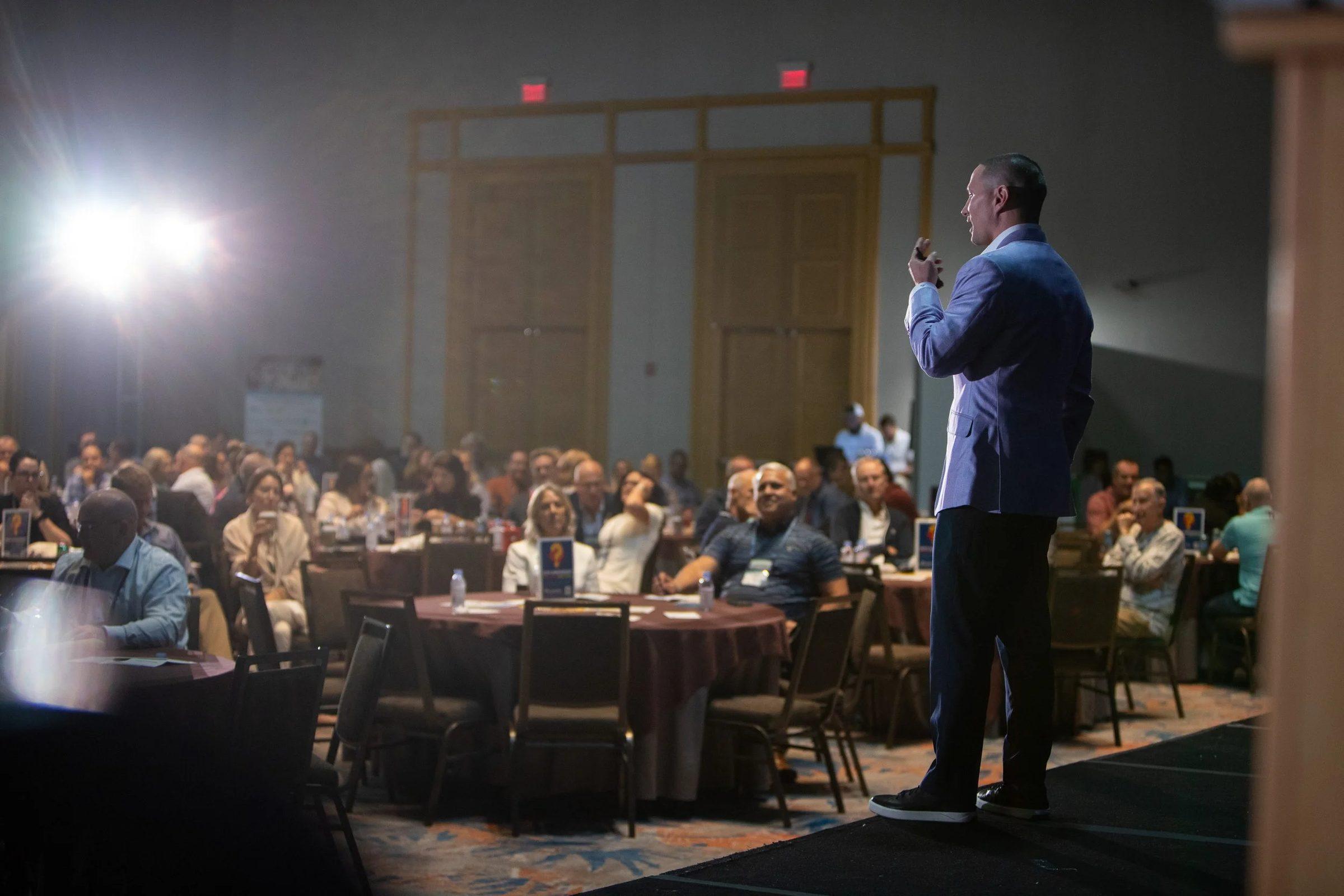
You want a crew that already knows your brand. Resource Recycling has worked with us for nine years across 25+ conferences. Their events move between host cities, including Austin, Orlando, New Orleans, National Harbor near Washington, Grapevine near Dallas and Chula Vista near San Diego. The venue changes from year to year, while the production partner, the session recording setup and the standards carry over. See the Resource Recycling case study.
You want fewer handoffs. One producer, one contract, one file-naming standard and one editor who knows last year's footage. Briefing a new vendor in every city costs time, and the results drift.
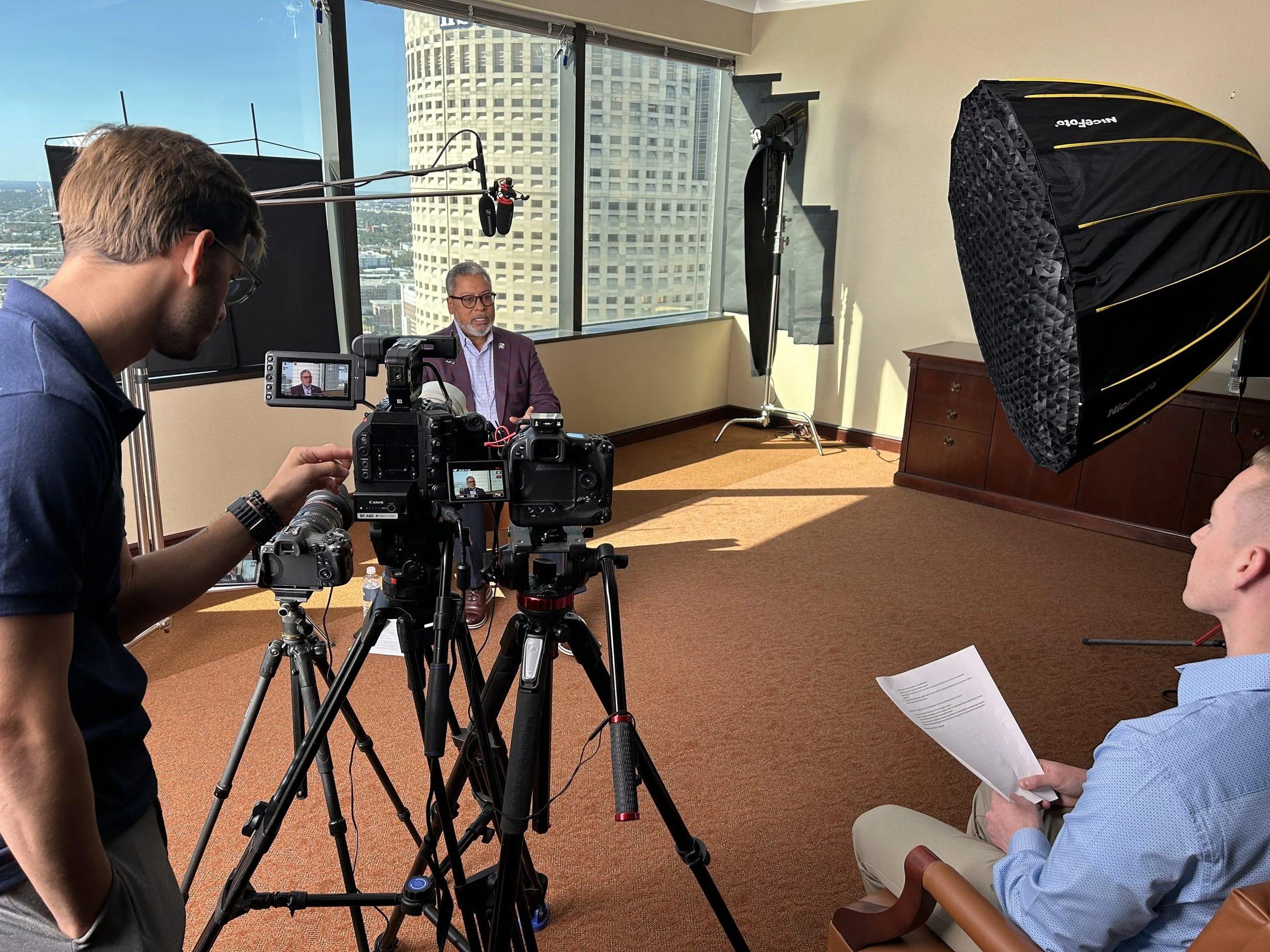
The format is specialized. Multi-camera session recording with direct slide capture, a greenroom interview studio or same-day recap videos are hard to hand to a new team every time.
How a travel shoot is planned
- Discovery call. What you need delivered, where it will live and who approves it.
- Scope and schedule. Shoot days, travel days and the order of locations.
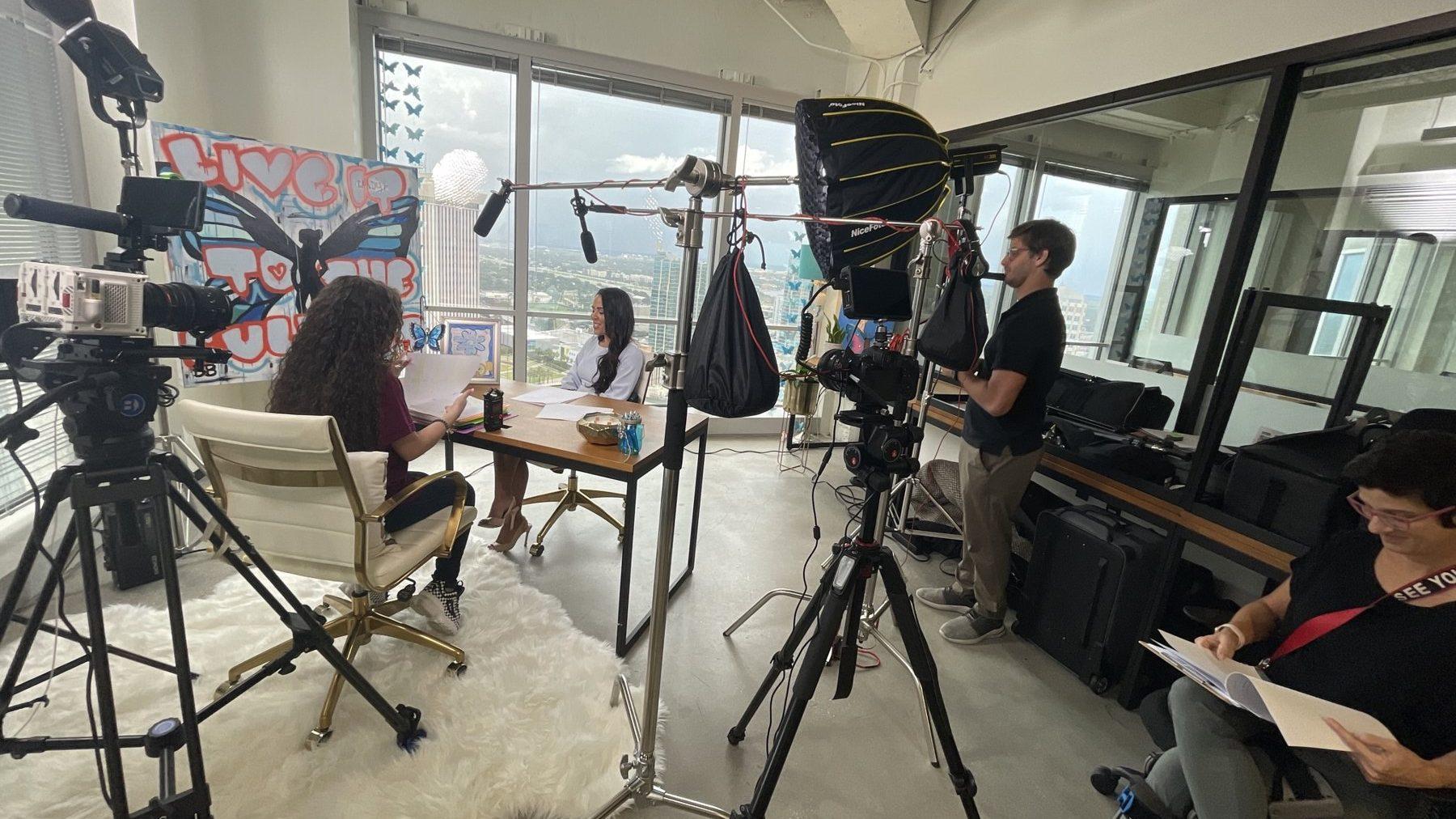
- Crew plan. Who travels from our core crew and who we hire locally.
- Gear plan. What flies with the crew, what ships ahead and what we rent near the location.
- Locations and permits. Venue rules, property permissions and film permits where needed.
- Call sheets in local time. Every schedule written in the time zone where the shoot happens.
- Post-production plan. Who edits, how reviews work across time zones and when files arrive.
How travel is quoted
Travel should not be buried inside a day rate. A travel quote should show each piece so you can see what it adds and make tradeoffs. The usual line items:
- Airfare for traveling crew
- Checked baggage and oversize fees for equipment cases
- Hotel nights, including the night before an early call
- Ground transportation, often a cargo van for gear
- Per diem for meals
- Travel days, which are days the crew is not shooting
- Gear shipping or local equipment rental
- Local hires, such as production assistants or hair and makeup
There are ways to manage these costs: stack several shoots into one trip, use a conference's hotel room block, or route a multi-city tour so the crew never doubles back. Big Wave quotes every project after a discovery call, because the right plan depends on your deliverables.
Gear: fly it, ship it or rent it
| Option | Best for | Watch out for |
|---|---|---|
| Fly with the crew | Cameras, lenses, audio, core lighting, drones | Airline weight limits and battery rules |
| Ship ahead | Heavy grip, backdrops, conference staging pieces | Venue receiving hours and handling fees |
| Rent locally | Large lights, generators, specialty rigs | Availability on busy dates, so book early |
Batteries are the most common trip-up. Under the FAA's PackSafe rules, spare lithium ion batteries must travel in carry-on baggage only. Batteries are limited to 100 watt hours each, and with airline approval a passenger may carry up to two spare larger batteries between 101 and 160 watt hours. Many airlines set stricter limits, so the crew checks each carrier before the trip.
Local hires: who travels and who we hire there
Big Wave is owned and led by Brian Adams and John Ruz, and a core crew of five travels with us, building out to a full set of 15 crew members for multi-camera conferences and large shoots. On a typical travel shoot, the people who carry the creative vision and the client relationship travel. Support roles that do not need brand knowledge can be hired in the destination city:
- Production assistants
- Hair and makeup
- Grip and electric for larger lighting setups
- Specialty operators, such as a jib or a second drone pilot
Local hires save travel costs and bring local knowledge, such as where to park the van at a downtown venue.
Permits and locations in another city
Every city has its own film office, lead times and insurance rules. In the Orlando region alone, the Orlando Film Commission lists processing times from five business days in most municipalities to 30 days for Orange County parks, and public property shoots there need a certificate of insurance naming the city or county. Expect similar variation in Atlanta, Denver or anywhere else.
Venues have their own rules for power, loading docks and rigging. Drone flights near airports need FAA authorization, usually through LAANC, and Big Wave plans every flight around FAA Part 107 rules and airspace authorization.
Multi-city tours
A multi-city tour is a production in itself. What keeps it on track:
- Route by region so the crew moves forward, never back
- One shot list template adapted for each location
- Offload and back up footage every night, with copies traveling separately
- A short wrap note each day, so you know what was captured
- Delivery by city or all at once, agreed before the tour starts
Time zones
When it is 9 a.m. on a set in Chula Vista, it is already noon in Orlando. Denver and Greeley run two hours behind Eastern. Write every call sheet in local time, schedule client review calls when both teams are awake, and build rest into the schedule after early flights.
International shoots
Travel to Canada, Mexico and the Caribbean adds customs paperwork. For Canada, qualifying equipment can be admitted temporarily on an ATA Carnet, an international customs document that the Canada Border Services Agency accepts for the temporary admission of goods. Start international planning early, and confirm passports and equipment lists well before the trip.
Questions to ask before you hire a crew from out of state
- Which roles travel, and which will be hired locally?
- Is travel shown as separate line items, and what assumptions are behind them?
- How will gear get there, and what is the backup if a case is delayed?
- Who handles venue rules, permits and insurance certificates in my city?
- How is footage backed up while the crew is on the road?
- What happens to the schedule if a flight is cancelled or a storm moves in?
- Have you filmed in cities like ours, and can we see that work?
A crew that answers these quickly and in writing has done this before.
Bring us to your city
Send us the cities, the dates and the deliverables, and we will come back with a crew plan, a gear plan and the travel broken out line by line. That works the same for one city or seven. Our locations pages cover the markets we serve beyond Orlando. To start, book a free discovery call with Brian, call or text the office at 407.498.5980, or email brian@meetbigwave.com.
Sources
- Federal Aviation Administration, PackSafe: Lithium batteries
- Canada Border Services Agency, Memorandum D8-1-7 on A.T.A. Carnets
- Orlando Economic Partnership, Film Orlando one-stop permitting
- Federal Aviation Administration, UAS Data Exchange (LAANC)