The short answer
A commercial moves through six stages: the brief, creative and script, pre-production, the shoot, post-production with review rounds, and delivery to each placement's specs. Big Wave Productions runs this commercial video production process for TV, streaming, YouTube and paid social, planning every version before the shoot, as it did for Harmar's product ads with on-screen callouts.
A commercial gets made in six stages: the brief, creative and script, pre-production, the shoot, post-production with review rounds, and delivery to every placement in the media plan. The shoot is the shortest part. Most of the time, and most of the decisions that make or break a spot, sit before and after it. Big Wave Productions produces commercials for brands, banks and financial institutions, and hospitality companies, and this is the process we run on each one.
I'm Brian Adams, Big Wave's co-owner and executive producer. I run the producing side, so this is written from the chair that manages schedules, approvals and delivery.
The six stages at a glance
| Stage | What happens | Your team's role | What comes out |
|---|---|---|---|
| 1. Brief | Goal, audience, offer, media plan, budget range | Provide the facts and the media plan | A written brief |
| 2. Creative | Concepts, script, storyboard | Choose a direction, approve the script | Approved script and boards |
| 3. Pre-production | Casting, locations, wardrobe, props, shot list, schedule | Approve talent and locations, legal review | Call sheet and shot list |
| 4. Shoot | Filming every version on the list | One approver on set or on call | Footage, with backups |
| 5. Post-production | Edit, review, color, sound, graphics, music | Consolidated feedback each round | Approved final cut |
| 6. Delivery | Masters and cutdowns to spec | Hand files to your media buyer | A file for every placement |
1. The brief
A commercial brief answers five things: what you are selling, who needs to see it, what they should do next, where the spot will run and when the flight starts. Add the mandatories, meaning logo use, legal lines, offer details and brand rules. Then share a budget range. A range doesn't commit you to spending all of it. It tells the producer whether to plan one location or three, actors or real customers, a simple end card or full animation.
The media plan matters more than most clients expect. A 30-second streaming spot, a 6-second YouTube bumper and a muted vertical ad in a social feed each need a different opening and different pacing. If the plan is still being built, give us the likely placements and we will shoot for all of them.
2. Creative: concept, script and storyboard
Creative turns the brief into a story. Usually that means a few concepts in short written form, then a full script and storyboard for the one you choose. If an agency owns your creative, this stage is theirs, and we pick up from the approved script and boards.
Write for the way the spot will actually be seen. Google's ad documentation says viewers can skip a skippable in-stream YouTube ad after 5 seconds, and bumper ads run up to 6 seconds (Google Ads Help). The product and the brand have to show up early. Paid social often plays muted, so key lines should also work as on-screen text.
For banks and financial institutions, the script goes to compliance at this stage, not after the edit. Our bank video compliance checklist explains what reviewers look for.
3. Pre-production
Pre-production is where a script becomes a schedule. On a typical commercial it covers:
- Casting and talent coordination, including releases that cover your media plan and run length
- Location scouting, permits and written permission for private property
- Wardrobe, props and product prep, with spare product on hand
- A shot list for every version, marking horizontal, vertical and square frames, plus close-ups for graphic callouts
- Music direction, so licensing is settled before the edit starts
- The call sheet: who arrives when, the order of shots and who approves on set
This is also where we choose the camera package. Big Wave shoots on RED and Canon cinema cameras in 4K or 6K. Capturing at higher resolution leaves room to reframe a horizontal shot for a vertical cutdown without visible loss of quality.
4. The shoot
A single spot is often filmed in one day. Crew size follows the script: a director and producer, a director of photography and camera team, lighting, audio and talent. On your side, bring one person who can approve takes. Approving a frame on set takes seconds. Finding out in the edit that the product label faces the wrong way costs a reshoot.
We also shoot alternate openings and end lines, which give your media team versions to test against each other. If the plan calls for aerials, drone flights are planned around FAA Part 107 rules and airspace authorization, and scheduled for the right light and weather.
5. Post-production and review rounds
Post runs in a set order, and skipping ahead is how budgets slip.
- Rough cut. Story and timing, with temporary music and placeholder graphics. This is the round for big changes.
- Fine cut. Adjustments to pacing, takes and lines, ending in picture lock.
- Finishing. Color grading, sound design and mix, licensed music, motion graphics and on-screen callouts.
- Final review. Legal lines, captions, the end card and spelling, checked one last time.
Changing the story after color and sound are finished means redoing them. Agree on the number of review rounds in writing, and send consolidated feedback from one person each round.
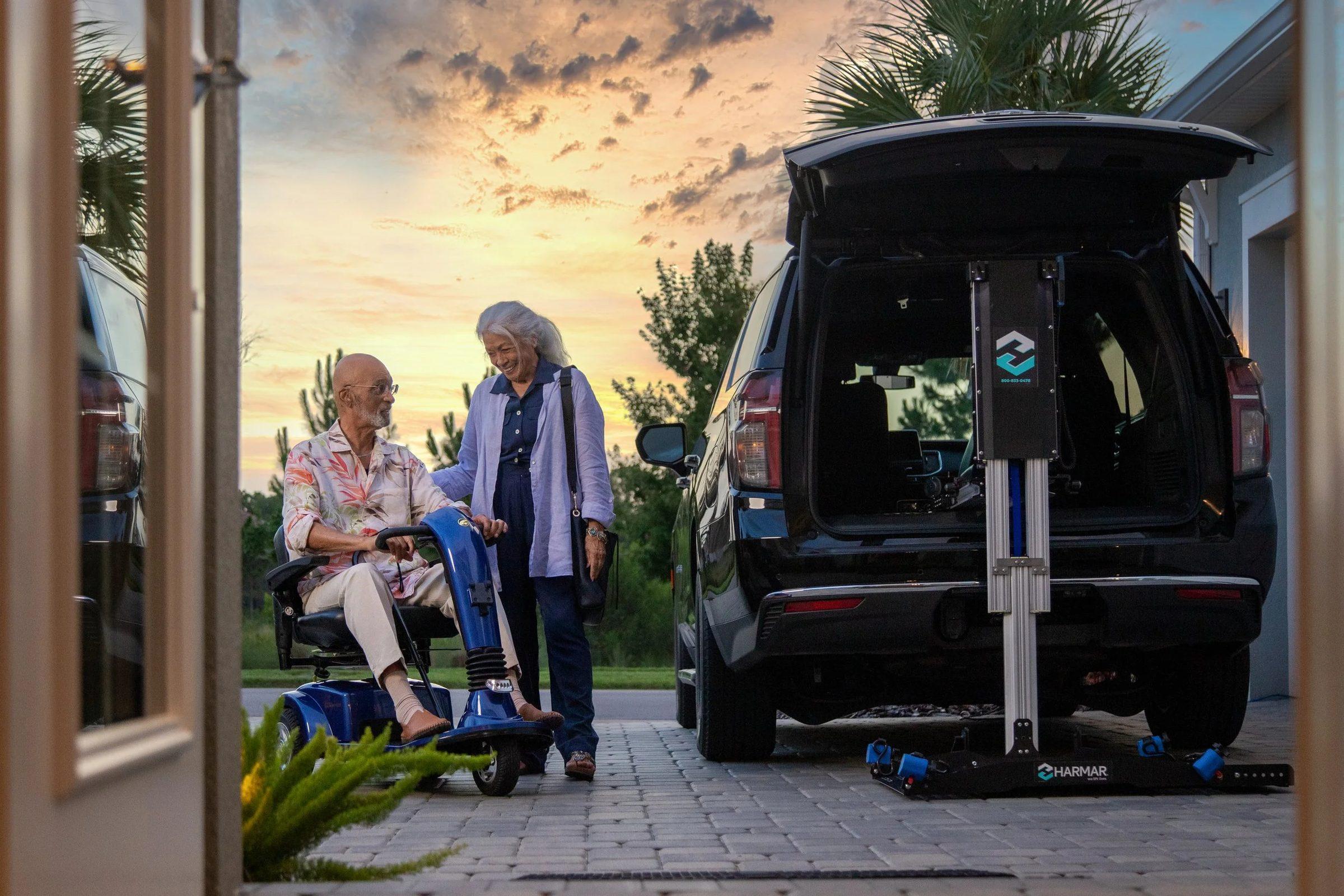
Finishing is also where graphics and effects earn their keep. In Harmar's product ads, on-screen callouts name each feature as the viewer sees it working, so the ad makes sense in a muted feed. On SouthState Bank's social video with NFL running back Rachaad White, the opening sequence and a football spiral close-up used VFX rotoscoping and AI-assisted effects.
6. Delivery
Delivery means a correctly named file for every placement: broadcast or streaming masters at the specs each outlet requests, YouTube and social cutdowns in each aspect ratio, versions with and without burned-in captions, and clean versions without text if your agency will localize them. Ask for the delivery list in the proposal so everyone knows what finished looks like before the shoot.
Where commercial schedules slip
Most delays we see trace back to one of these:
- The media plan arrives after the shoot, and the vertical versions were never framed.
- Too many approvers send conflicting notes on the rough cut.
- Legal or compliance sees the script for the first time in the final edit.
- The temp music becomes a favorite, and nobody can license it for broadcast.
- Product samples arrive the morning of the shoot, damaged.
- The flight date moves up, and post-production absorbs the cut.
Each of these is a planning problem, which is why we build the schedule backward from your flight date on the first call.
How this compares with a brand film or corporate video
The stages are the same for a brand film or a corporate video, but the weight shifts. A commercial lives inside a media buy, so lengths and specs are fixed and versions matter. A brand film has more room to breathe and a longer shelf life. If you are still deciding which you need, read brand film, commercial or corporate video. For the talent and music side, see usage rights and music licensing.
Start with the flight date
Send the product, the placements and the date the spot needs to run. Our commercial video production page shows how we approach spots for TV, streaming and social. Book a discovery call or call or text the office at 407.498.5980, and we will map the schedule backward from your launch. We quote each commercial after that call.
Sources
- Google Ads Help, About video ad formats