The short answer
Make a brand film when people need to understand who you are and why you matter, a commercial when a specific audience needs to take a specific action, and a corporate video when you need to explain, inform or train. The three differ in goal, length, channel and budget logic, and one well-planned shoot can feed all of them.
A brand film tells people who you are, a commercial asks them to do something, and a corporate video explains something they need to know. Pick the format based on the job the video has to do and where it will play, then let length and budget follow. Big Wave Productions, a national photo and video production company headquartered in Orlando, makes all three for clients, and we often film them in the same production days.
What is a brand film?
A brand film is a story about your company's identity: why it exists, who it serves and what it is like from the inside. It sells the relationship rather than a product. Success looks like recognition, trust and a reason to choose you later.
Brand films usually run about one to three minutes on a website or YouTube, sometimes longer for a documentary-style piece, and they get cut down for social. They have the longest shelf life of the three because they are not tied to an offer or a date.
Examples from our work:
- SouthState Bank, Rivergate Tower. A film about SouthState's new regional headquarters in Tampa, built from a timelapse of the signage installation, aerials of the building and skyline, and interviews with SouthState's CEO, Tampa's mayor, the bank's West Florida Division President and the president of the Tampa Bay Economic Development Council. It ran on the bank's website and social channels, premiered at the grand opening, and kept playing on the headquarters display afterward.
- Kforce, "New Heights." A brand video for the staffing company.
- AstroPak's 60th anniversary story video. A milestone is a natural moment for a brand film, because the company has a story worth telling and a reason to tell it now.
What is a commercial?
A commercial is paid media with one job: get a defined audience to act. Visit, call, buy, book, open an account. It runs where you buy placement (TV, streaming, YouTube, paid social, LinkedIn), and the placement sets the rules, including length.
Commercial lengths are usually fixed by the media buy. YouTube bumper ads run 6 seconds, and Google lists non-skippable in-stream ads at 15 to 60 seconds depending on the campaign subtype. LinkedIn accepts video ads from 3 seconds to 30 minutes but recommends 15 to 30 seconds. TV and streaming buys are usually planned around :15 and :30 spots, with :60 when the story needs room. Your media buyer confirms what each network or platform accepts.
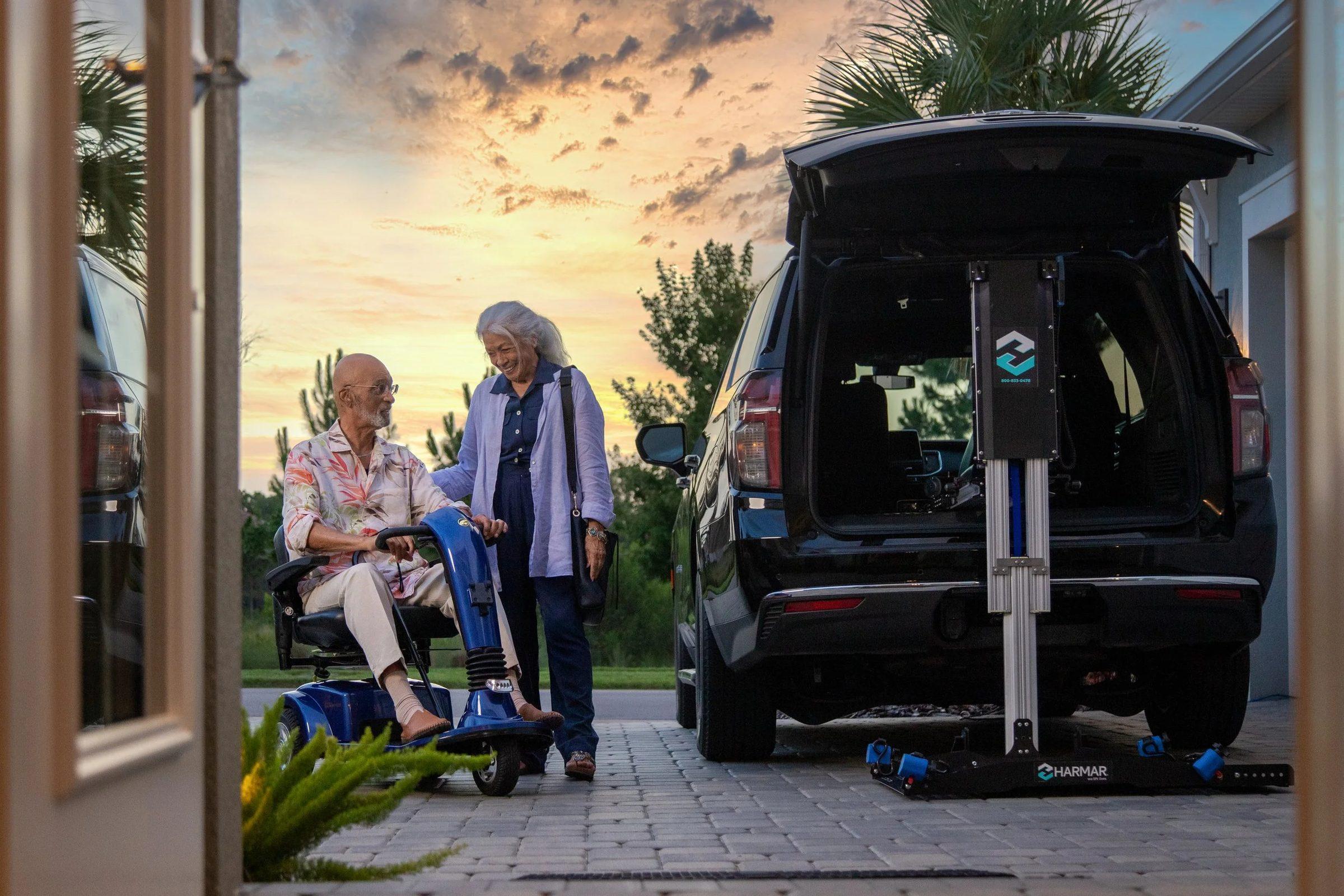
Our work for Harmar, which makes mobility and accessibility products, shows the format. The work included ads with callouts (on-screen labels that name a feature as it appears), a vehicle-lift "Access" ad, a "Mobility" ad and a backup-camera video, plus lifestyle photography in Miami. Each piece had one narrow job.
What is a corporate video?
A corporate video informs a defined audience: employees, recruits, investors, partners, event guests, or customers who already know you. Company overviews, executive messages, recruiting videos, training, product explainers, event recaps and open house videos all live here. Success means the audience understood and took the next step: applied, finished the training, showed up.
AstroPak's open house video is a good example. It sits next to the anniversary film but does a different job: it documents and shares an event. For banks, executive messages are among the most common corporate videos, and we cover them on our executive video page.
Brand film vs commercial vs corporate video at a glance
| Brand film | Commercial | Corporate video | |
|---|---|---|---|
| Main job | Build trust and recognition | Drive a specific action | Inform, explain or train |
| Primary audience | Prospects, the community, future hires | A targeted media audience | Employees, recruits, investors, existing customers |
| Typical length | 1 to 3 minutes, plus cutdowns | 6, 15, 30 or 60 seconds | 1 to 5 minutes, sometimes longer |
| Where it lives | Website, YouTube, LinkedIn, event and lobby screens | TV, streaming, YouTube ads, paid social | Intranet, training platform, careers page, email, events |
| How success is measured | Watch time, brand recall, inbound interest | Clicks, calls, conversions, cost per result | Completion, applications, attendance |
| Shelf life | Years | One campaign or flight | Until the information changes |
| Budget logic | Invest in story and craft, then spread it over years | Production plus media spend, plus versions to test | Clarity and efficiency, often in batches |
How the budget logic differs
Brand films justify more craft because they get used for years. The SouthState Rivergate film did three jobs from one production: web and social content, the centerpiece of a grand opening, and a film that kept running on the headquarters display afterward.
Commercials carry a second budget line: the media that puts them in front of people. A commercial that can't be versioned into several lengths and tested is an expensive single shot. Plan the :30, the :15 and the 6-second bumper before the shoot, not after it.
Corporate videos reward efficiency. Batch them. If you need a recruiting video, three executive messages and a benefits explainer, film them in the same production window with the same crew and lighting setups.
Our guide to corporate video costs breaks down the cost drivers in more detail.
Which one do you need?
Ask these questions in order:
- Is there media budget behind it? If you are buying placement, you need a commercial built for that placement.
- Does the audience already know you? If they do, and the goal is understanding or action inside an existing relationship, it is a corporate video.
- Is the goal to be chosen later? A market entry, a new headquarters, an anniversary or a rebrand points to a brand film.
- Is there a date that matters? Grand openings and anniversaries create a deadline and a live audience. Build the brand film for the event and the cutdowns for the weeks after.
Most companies need a mix. That works, as long as each piece has one clear job.
Where testimonials, social video and explainers fit
Not every video fits neatly into one of the three boxes. A few common formats sit across them:
- Customer testimonials can be any of the three. A full customer story on your website works like a brand film, a 30-second cut with an offer is a commercial, and a case study video for the sales team is a corporate video.
- Social video describes where a piece runs, so any of the three can end up there. The same brand film can become a series of vertical clips, and a commercial can run as a paid reel.
- Explainers are usually corporate videos when they serve existing customers, and commercials when they run as paid placements aimed at new ones.
- Event videos, like a recap or an open house video, are corporate pieces that can feed brand content for months if you film them with that in mind.
The test is the same every time: name the job, then pick the format and length that serve it.
Plan one shoot that feeds all three
Brand films, commercials and corporate videos share raw material: interviews, b-roll of your people and places, product shots, aerials. Because we shoot with the final edit in mind, we map every deliverable before we roll. One production can then yield the brand film, ad versions at the lengths your media plan needs, and corporate pieces built from the same interviews.
The planning step that makes this work is the deliverables list. For each piece, write down where it lives, its orientation and its approximate length. That list decides the cameras, lenses and blocking on the day. Read how long a brand video should be for lengths by channel.
Start with the job, then the format
Run the four questions above before you call anyone. If the answers point to more than one format, that is normal, and it usually means one production can cover them. Our brand films and commercial video production pages show how we scope each. When you have a rough deliverables list, book a free discovery call with Brian or call or text the office at 407.498.5980.
Sources
- Google Ads Help, About video ad formats.
- LinkedIn Marketing Solutions Help, Video ads advertising specifications.