The short answer
Big Wave Productions is a national photo and video production company, headquartered in Orlando, that films healthcare, medical device and mobility brands nationwide, including ads with on-screen callouts and lifestyle photography in Miami for Harmar. To choose any healthcare video production company, check its product and patient work, how it plans privacy with your team, its review process, captions and travel.
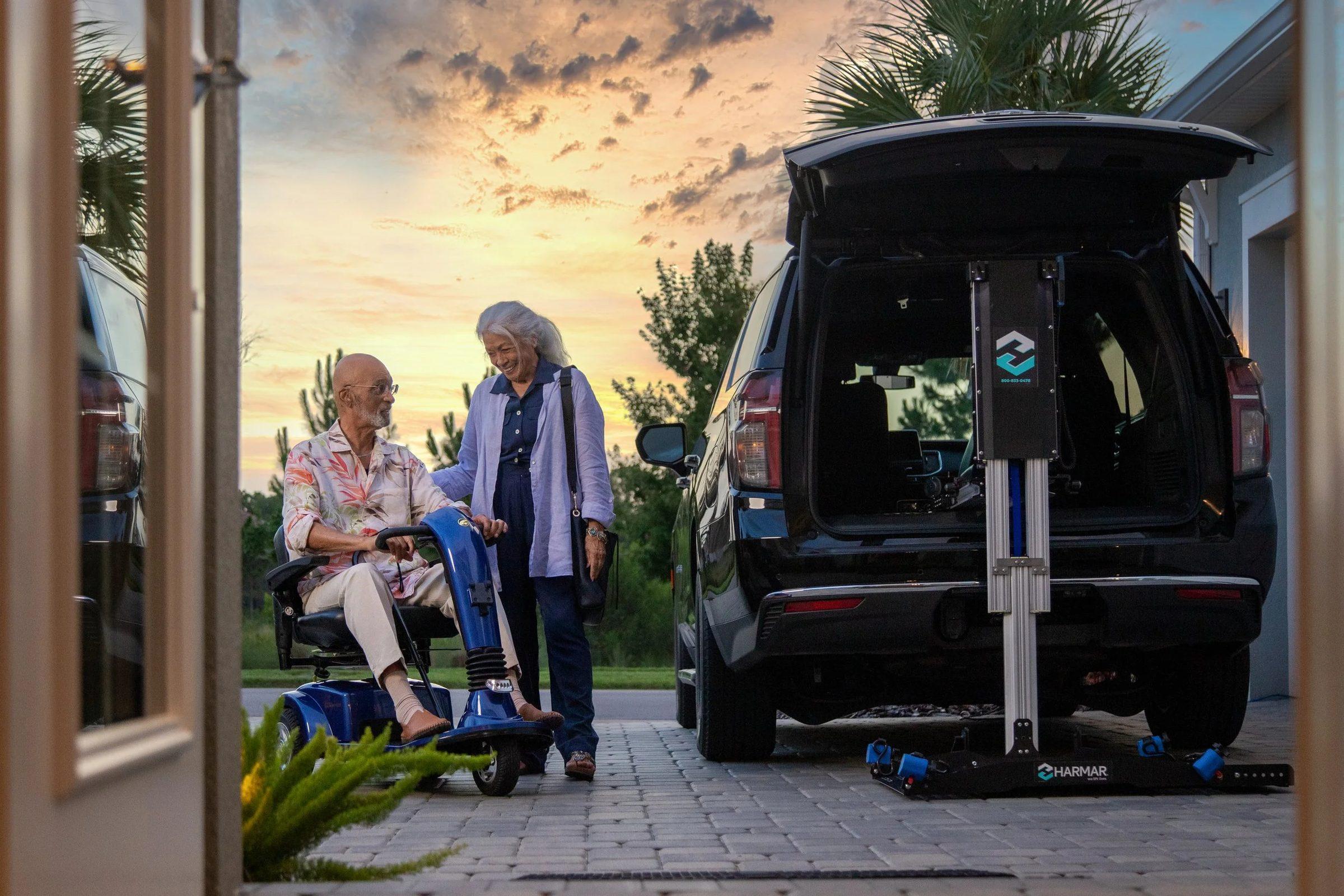
Choose a healthcare video production company the way you would choose any vendor that will work near patients: on proof of similar work, on how it plans privacy with your compliance team, and on how clearly it explains complicated things. Big Wave Productions is a national photo and video production company headquartered in Orlando. For Harmar, a mobility and accessibility products company, we produced ads with on-screen callouts, including a vehicle-lift ad called "Access" and a "Mobility" ad, plus a backup-camera video and lifestyle photography in Miami.
A note before the framework: we are a production company, not a law firm. Where privacy rules come up below, we point to the source and to the person who should interpret it for you, usually your privacy officer or compliance team.
What makes healthcare video harder to buy
Three things raise the stakes. The viewer is often anxious or facing a hard choice, such as a patient weighing a procedure or an adult child picking equipment for a parent. The content passes through more reviewers than most marketing, often clinical, legal, regulatory and brand. And the setting can hold protected information in plain sight: a monitor, a whiteboard or a wristband in the background of a shot.
Healthcare video also covers very different jobs. A device demo needs precise lighting and clear callouts. A patient story needs a gentle interviewer and a small crew. A recruiting film needs access to real shifts. A company that is right for one is not automatically right for another, so name the job before you compare anyone.
The evaluation framework
Proof in your kind of healthcare work
Sort the samples into the categories you need: product and device videos, patient or caregiver stories, facility and recruiting work, ads. For product work, check that the product is shown working in real hands and that you could explain a feature after one viewing. For people, check whether they look like themselves on a good day or like they are reading. On-screen callouts that name a feature at the moment it appears are a good sign. They keep a technical video short without a long voiceover.
Privacy planned with your team, before the shoot
The HIPAA Privacy Rule generally requires a covered entity to get a patient's written authorization before using protected health information for marketing (45 CFR 164.508(a)(3)). The Department of Health and Human Services addresses film crews directly in a HIPAA FAQ on film and media. It says providers may not let film crews into treatment areas where patient information is accessible without prior written authorization from each patient there, and that blurring faces afterward is not a substitute. The same FAQ says a provider using a contract film crew where patient information may be accessible must have a business associate agreement with that crew.
You don't need your video company to interpret any of this. You need one that asks who on your side does, and plans around the answer. Good signs:
- They ask for your privacy officer's requirements before quoting
- They plan empty or staged rooms for b-roll
- They treat monitors, charts, whiteboards and wristbands as things to clear from frame
- They expect a staff escort and marked no-film zones
- They complete your vendor paperwork and credentialing before the shoot date
The rule also lets a patient revoke an authorization in writing, with some limits (45 CFR 164.508(b)(5)). Ask your privacy team how your organization would handle that, and ask the production company how quickly it could re-cut a piece without that person.
A review process built for clinical and regulatory sign-off
Healthcare cuts rarely go from editor to publish in one round. Ask how many review rounds are in the proposal, who sees what at each stage, and how on-screen text is handled. When callouts and captions stay editable through review, a reviewer's wording change is a quick edit instead of a rebuild. Ask too whether scripts and interview outlines go to your reviewers before filming. That is where claim problems are cheapest to fix.
Accessibility as part of the deliverable
Your audience includes people with hearing loss, low vision and limited mobility, and for a mobility or accessibility brand, many viewers are the customer. The W3C's Web Content Accessibility Guidelines list captions for prerecorded video as a Level A requirement (WCAG 2.1, success criterion 1.2.2). Ask whether captions are included in the price, whether they come as burned-in text, a caption file or both, and how long on-screen text is held so it can be read.
Crew conduct on set
A healthcare set should be small and quiet. Ask how many people will be on site, how they will work around patient flow, and who your staff contact is for the day. For patient and caregiver stories, ask how the interviewer prepares people and whether interviewees can pause or stop at any time. Nobody should be pushed for tears.
Rights and the life of the content
Healthcare content often outlives the campaign that paid for it. A patient story may run for years on a service-line page, and a device demo may end up on a dealer's website. Ask who owns the footage, how long cast talent and music are licensed, and whether distributors, partners and trade show booths are covered. Our explainer on usage rights and music licensing has a checklist.
Travel and multi-site work
Health systems and device companies rarely live in one building. Ask how the crew covers several facilities in one trip, how each facility's filming policy gets confirmed before flights are booked, and how travel shows up in the quote.
Questions to ask a healthcare video production company
- What healthcare, device or mobility work can you show us, and what was your role?
- Who on our side do you need to hear from about privacy before filming?
- How do you keep patient information out of frame?
- How many review rounds are included, and does on-screen text stay editable?
- Are captions and transcripts part of delivery?
- How do you prepare a patient or caregiver for an interview?
- Will you complete our vendor paperwork and credentialing before the shoot?
Red flags
- "We'll blur it in post" offered as the plan for patients who haven't signed
- No question about who approves the final cut
- Device samples with no close-ups and no explanation of features
- Interview styles that push patients toward their hardest moment for effect
- A schedule with no room for clinical or regulatory review
- Captions treated as an extra you have to remember to request
How Big Wave Productions answers
Proof. Our named healthcare work is for Harmar, a mobility and accessibility products company: ads with on-screen callouts, including the vehicle-lift "Access" ad and a "Mobility" ad, a backup-camera video, and lifestyle photography in Miami. The callouts name each feature as it appears on screen.
Privacy. We follow the privacy policies your organization already has. Your privacy or compliance team writes them, and we work to them. Signed releases and any authorizations they require are collected before filming. Screens, charts and wristbands stay out of frame, no-film zones are respected, and a member of your staff stays with the crew. Vendor forms and credentialing for an outside crew get finished with your team ahead of the shoot date.
Review. We schedule rounds for marketing, clinical and compliance reviewers and keep on-screen text editable until final approval, so wording changes don't send a project back to the start.
On set. A small crew, each step explained before it happens, and interviewees who can pause or stop whenever they want. We film on RED and Canon cinema cameras with professional lighting and wireless audio, so small product details read clearly and voices stay clean in busy buildings.
Delivery. Final videos and photos in every orientation you need, with captions added in post-production for accessibility and silent viewing.
Travel. We are headquartered in Orlando and work regularly in Tampa Bay, and out-of-state health systems and device brands book us exactly the way local clients do. Filming policies, escort rules and credentialing get confirmed with your team before anyone books a flight.
For interview technique, our guide to planning a customer testimonial video applies to patients and caregivers too. For product launches and ads, see our commercial video production service.
Start with the audience and the approval chain
Bring two names to the first call: the audience the video has to reach, and the last person who has to approve it. Everything else in the plan follows from those two. Our healthcare and medical video production page has more on what we make for healthcare brands. Book a free discovery call with Brian, or call or text the office at 407.498.5980.
Sources
- 45 CFR 164.508, HIPAA Privacy Rule: uses and disclosures for which an authorization is required, including marketing and revocation.
- U.S. Department of Health and Human Services, HIPAA FAQ: film and media access to treatment areas.
- W3C, Understanding WCAG 2.1 Success Criterion 1.2.2: Captions (Prerecorded).