The short answer
Build a financial literacy video series by choosing one format and one audience, giving the series a name, and publishing on a fixed schedule. Film a quarter of short episodes in one content day, get scripts through compliance before the shoot, and post each episode on social, your website and branch screens. Measure completion, saves and the questions people ask.
A financial literacy video series works when it has one format, one audience and a fixed schedule, and when the episodes are filmed in batches instead of one at a time. Pick a series format, name it, film a quarter's worth of short episodes in a single content day, and publish them every week. Big Wave Productions plans these series as part of its social media content for banks and financial institutions, working backward from the compliance calendar so scripts are approved before the shoot and review does not stall the weekly schedule.
Why a series, and why now
Fraud is the clearest reason. The FTC received 3 million fraud reports and $15.9 billion in reported losses in 2025, up from 2.6 million reports and over $12 billion the year before. Investment scams accounted for $7.9 billion of those losses, and imposter scams drew more than 1 million reports. Among business impersonators, bank impersonators drew the highest reported losses. And nearly 30% of people who reported losing money said the scam started on social media, the same feeds where your videos run.
Schools are the second reason. In September 2026, California's Department of Education noted that a 2024 law made it the 26th state to require personal finance as a high school graduation requirement. That puts personal finance on the school calendar, and a local bank with good, plain material is in a position to help.
A series beats one-off posts because it builds a habit. A name, a host and a day of the week tell viewers what to expect.
Choose a series format
Pick one format to start. You can add a second series once the first one runs on schedule for a full quarter.
| Format | Best audience | Episode length | Cadence |
|---|---|---|---|
| Recurring host | Broad customer base | 45 to 90 seconds | Weekly |
| Weekly tips | Busy adults scrolling | 20 to 45 seconds | Weekly |
| Fraud and scam awareness | Everyone, especially older adults and their families | 30 to 60 seconds | Weekly or as scams emerge |
| First-time homebuyer | Renters and young families | 60 to 120 seconds | Weekly over a season |
| Small business basics | Owners and new entrepreneurs | 60 to 120 seconds | Twice a month |
| Teens and students | High school and college students, parents | 20 to 60 seconds | Weekly during the school year |
Recurring host
One employee becomes the face of the series. Viewers return for the person as much as the topic. Choose someone who explains things clearly and actually likes doing it, and give the series a simple name your audience can remember.
Weekly tips
One tip, one action, under 45 seconds. Build a year of topics in one planning session: emergency funds, credit reports, budgeting apps, reading a statement, card controls. Short tips are the easiest format to batch.
Fraud and scam awareness
The most useful series most institutions can run. One scam per episode: what it looks like, the giveaway, and what to do. Use fake, clearly labeled examples, never real customer messages. End every episode with the same line about how your institution will and will not contact people, so the message repeats until it sticks.
First-time homebuyer
A season of episodes in order, from checking credit to closing day. Pair the series with a live workshop or webinar, and use the videos as homework between sessions.
Small business basics
Separating business and personal finances, cash flow seasons, preparing for a loan conversation. Feature real customers when you can, with signed releases. Our guide to 25 bank social video ideas includes several more formats for business audiences.
Teens and students
Short, visual and free of lectures. First paycheck, first bank account, first car. Recruit an employee in their twenties to host, film on campus with the school's permission, and get a parent or guardian release for anyone under 18.
Batch it: one content day, a quarter of episodes
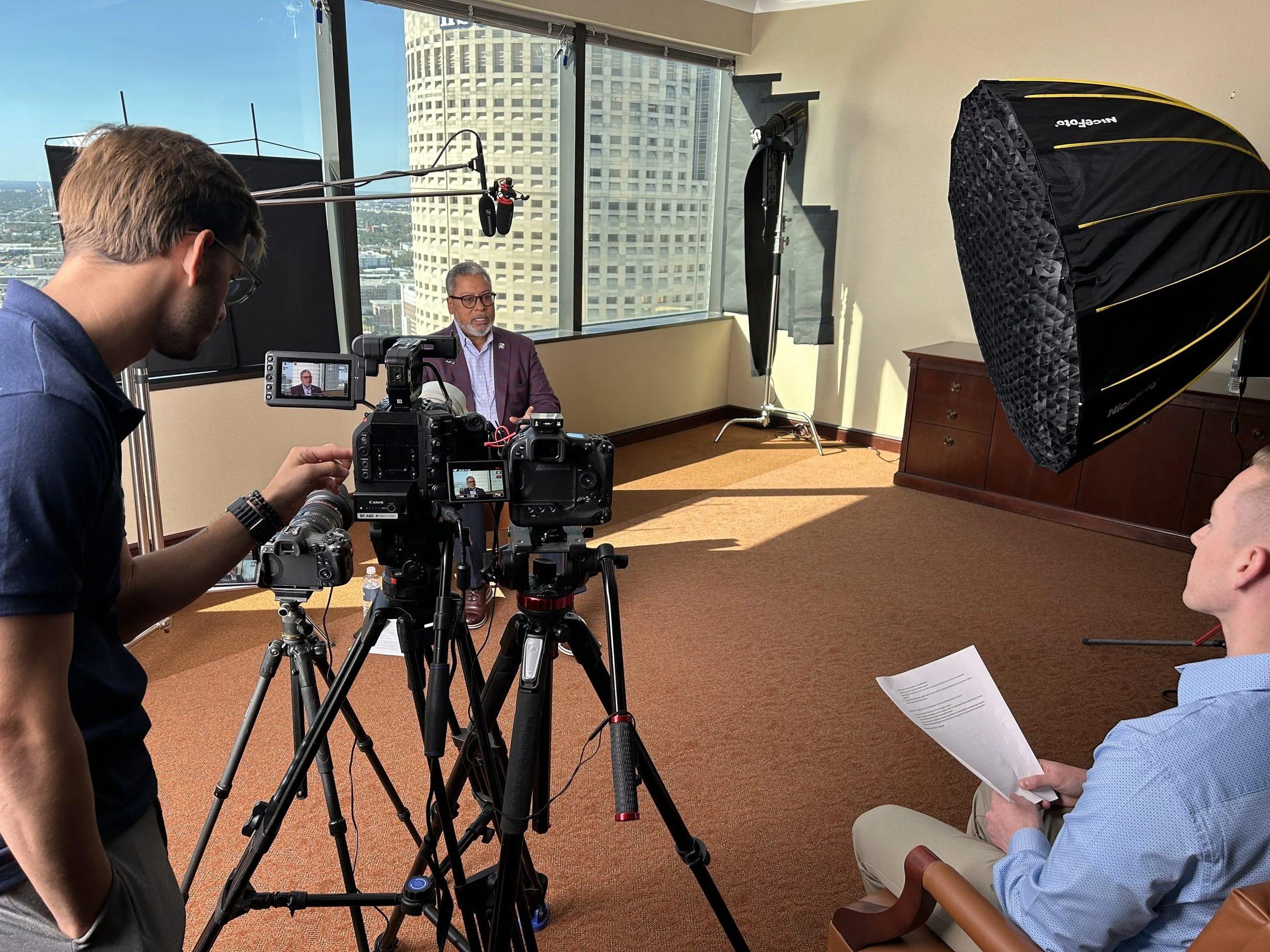
Batch filming is what makes a weekly series sustainable. Instead of filming each episode as it comes due, film a quarter of episodes on a single planned content day.
This is how we typically plan one:
- Topic list, four weeks out. Thirteen topics for a weekly series, plus two spares.
- Script outlines, three weeks out. Bullet points the host can talk through, not word-for-word scripts.
- Compliance review, two weeks out. Scripts come back approved before anyone books a crew.
- Two or three sets in one location. A desk, a lobby corner, a soft seating area. Each set changes the look so episodes do not feel identical.
- Wardrobe changes. Three or four outfits so the series feels like it was filmed over weeks.
- B-roll and screen captures last. App walkthroughs, hands on a phone, branch exteriors.
- Edit templates. One title card design, caption style and end slate, so every episode looks like part of the same series.
The batching habit comes from conference work. At E-Scrap 2025 in Grapevine, Texas, one Big Wave crew delivered 500+ edited photos, six full-length session and plenary videos, 15 greenroom interviews and 10 social promo videos in three days. A content day for a bank is calmer than that, but the same planning discipline applies.
Compliance notes
Education is not automatically exempt from advertising rules. This is not legal advice, so talk to your compliance team early. Common review points:
- Rates and yields. If an episode states a rate of return on a deposit account, Regulation DD requires it be stated as an annual percentage yield, with additional disclosures.
- Loan terms. Mentioning a payment amount, the number of payments, a down payment or a finance charge can trigger additional disclosures under Regulation Z.
- "Free." Regulation DD restricts calling an account free if maintenance or activity fees may apply.
- General, not personal. Keep lessons general and say so. Avoid anything that sounds like individual investment or tax advice.
- Fraud examples. Use invented names and numbers, and make sure the contact policy stated on camera matches your actual policy.
- Captions. Caption every episode for accessibility and for viewers watching with the sound off.
Keeping specific rates out of general lessons has a practical benefit too: the episode stays accurate when rates change. Our bank video compliance checklist has the full review list.
Distribution
Each episode should live in several places:
- Social. Instagram Reels, Facebook, TikTok and LinkedIn, one episode per week.
- Your website. A library page with every episode by topic, so the series keeps working in search.
- YouTube playlists. Organized by series, where people search for how-to answers.
- Email. One episode per newsletter, and fraud episodes in new account welcome emails.
- Branch screens. Looped, captioned episodes in lobbies and drive-thru lanes.
- Partners. Schools, libraries, chambers of commerce and senior centers that can share the videos with their audiences.
Measuring it
Views alone will not tell you much. These metrics show whether people are learning and coming back:
| Metric | What it tells you |
|---|---|
| Completion rate and average watch time | Whether episodes hold attention |
| Saves and shares | Whether people found it useful enough to keep or send |
| Comments and messages with questions | Which topics to cover next |
| Library page and playlist views | Whether the series works beyond the feed |
| Workshop sign-ups and appointment requests | Whether education leads to conversations |
| Mentions to your fraud team | Whether customers recognized a scam from an episode |
Review the numbers monthly, keep the formats that hold attention, and drop the ones that do not.
Start your series
A financial literacy series is one of the most useful things a bank can publish, and the hardest part is the first quarter. Once a host is chosen and thirteen scripts are approved, the rest is a calendar. Big Wave Productions plans and films content days for banks and financial institutions. If you have a format in mind, or just a list of questions your customers keep asking, book a free discovery call with Brian, or call or text 407.498.5980.
Sources
- Federal Trade Commission, "FTC Testifies before the Joint Economic Committee on Agency's Efforts to Combat Fraud", March 25, 2026.
- Federal Trade Commission, "New FTC Data Show People Have Lost Billions to Social Media Scams", April 27, 2026.
- Federal Trade Commission, "FTC Data Show People Reported Losing $3.5 Billion to Imposter Scams in 2025", June 15, 2026.
- California Department of Education, News Release 26-40, September 22, 2026.
- Consumer Financial Protection Bureau, Regulation DD, 12 CFR 1030.8 (Advertising).
- Consumer Financial Protection Bureau, Regulation Z, 12 CFR 1026.24 (Advertising).