The short answer
Drone video is worth it when place or scale is part of the story: a headquarters, campus, marina, resort, large event or construction milestone. In the U.S., most business drone flights fall under the FAA's Part 107 rules, which require a certificated remote pilot, a registered drone that broadcasts Remote ID, and authorization before flying in controlled airspace near airports.
Drone video earns its place when the setting is part of the message: a new headquarters, a campus, a marina, a resort, an outdoor event or a construction milestone. What aerials cost you most is time: airspace checks, authorization, weather windows and the rules about flying near people. At Big Wave Productions in Orlando, we plan every flight around the FAA's Part 107 rules and airspace authorization, and the sections below cover the parts of those rules a marketing team actually runs into.
When aerials are worth it
Aerials answer one question better than any other shot: where is this, and how big is it? Use them when that question matters.
- Headquarters and campuses. For SouthState Bank's new Tampa headquarters at Rivergate Tower, we combined aerial and ground footage of the building and the skyline with interviews and a timelapse of the signage installation. The film premiered at the grand opening, and the skyline shots set the scale before anyone spoke.
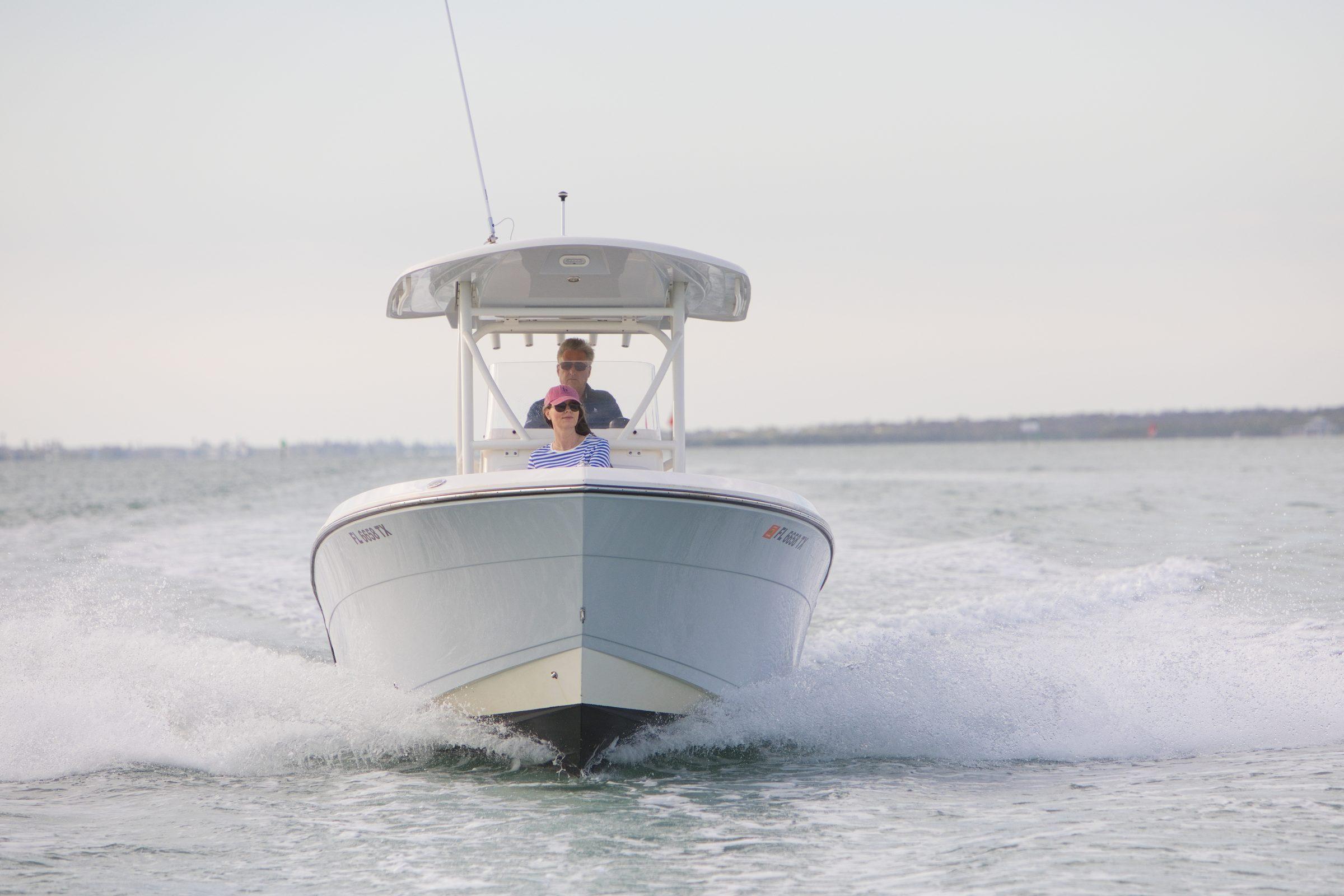
- Marinas and waterfront properties. For BlueWater Marinas, our photo and video work included drone and slow-motion b-roll across locations in Englewood and Pompano Beach in Florida and Duxbury, Massachusetts. From the air, a viewer sees how the slips, the buildings and the open water fit together. We have also made a promo video for Port 32 Marinas in Tierra Verde, Florida. More on our marina work.
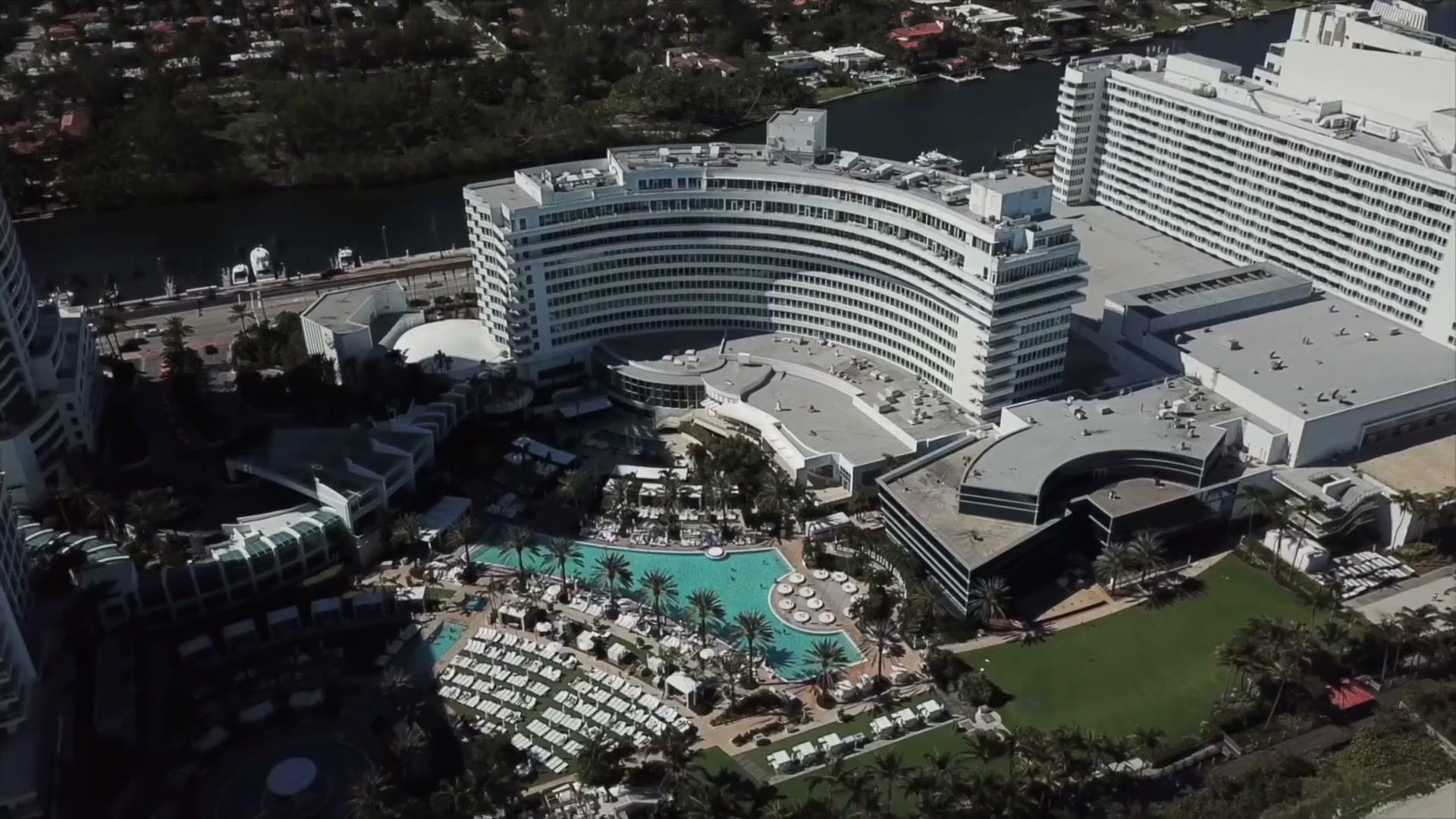
- Resorts and hospitality. Pools, beaches, grounds and the setting around the property. Guests book a place, and aerials show the place. See our hospitality and resort page.
- Outdoor events. Arrivals, the scale of a festival ground, the venue at golden hour, planned around the rules for flying near people.
- Construction and milestones. Progress from the same positions over months, the day the signage goes up, the opening.
A handful of aerial shots do most of the work in a business video: the reveal that rises over a foreground to show the property, the top-down view that turns a site into a clean graphic shape, the slow orbit around a building, and the tracking shot that follows a boat or a vehicle. Plan which of these you need on the shot list, and plan the orientation too, since a vertical reel and a 16:9 film frame the same building differently.
When to skip the drone
- The story is about people, and the setting is ordinary.
- The location sits in restricted airspace or next to critical infrastructure, and authorization won't fit your timeline.
- The budget would do more on the ground, as another interview or another location.
- The schedule has no room for weather. Aerials need a window, and a fixed hour on a fixed day is a gamble.
What aerials cost you in time
The flight itself is quick. The planning around it is not.
| Planning step | What it involves | When it happens |
|---|---|---|
| Airspace check | Confirm the airspace class, nearby airports and any special-use airspace | Pre-production |
| Airspace authorization | A LAANC request at participating airports, a further coordination request, or the FAA's manual process | Days to weeks ahead, depending on location |
| TFR and NOTAM check | Look for temporary flight restrictions and notices | Before every flight |
| Property permission | Owner or manager sign-off for takeoff, landing and flight over the site | Before scheduling |
| People on the ground | Flight paths planned around the operations over people rules | Shot list stage |
| Weather window | Visibility, clouds, wind and rain, with a backup time in the schedule | Week of the shoot |
| Insurance paperwork | Certificate of insurance for the venue or property manager | Before the shoot |
| Light | Sunrise and sunset windows for the best aerial light | Scheduling |
The FAA rules at a business level
This is a summary for marketers, not legal or aviation advice. Rules change, so verify current requirements at faa.gov.
Part 107 and the remote pilot
The FAA says that if your drone weighs less than 55 pounds, you can fly for work or business by following the Part 107 rules. The remote pilot must be at least 16, pass the FAA's knowledge test and hold a Remote Pilot Certificate. Under 14 CFR 107.65, pilots must pass the test or complete recurrent training within the previous 24 calendar months. Each drone is registered with the FAA ($5, valid for three years) and marked with its registration number.
Altitude, visibility and line of sight
Part 107 caps altitude at 400 feet above ground level, unless the drone stays within a 400-foot radius of a structure and no more than 400 feet above its top, which matters when filming a tower. It requires at least 3 statute miles of visibility and keeps drones 500 feet below clouds and 2,000 feet from them horizontally. The pilot or a visual observer must keep the drone in sight, without binoculars, for the whole flight.
Controlled airspace and LAANC
Flying in Class B, C or D airspace, or the surface area of Class E airspace around an airport, requires prior authorization from air traffic control. The FAA's LAANC system handles many of those requests in near-real time for flights at or below 400 feet, and the FAA lists it as available at 726 airports. Requests above a map's set ceiling go through further coordination, which pilots can submit up to 90 days in advance. LAANC provides authorization only. Pilots still check NOTAMs, weather and every other restriction.
Remote ID
Since September 16, 2023, drones that must be registered also have to broadcast Remote ID, either through built-in equipment or an add-on broadcast module, unless they fly inside an FAA-recognized identification area.
Flying over people, moving vehicles and at night
The FAA's operations over people rule took effect April 21, 2021. It sorts drones into four categories by risk. The lightest category covers drones of 0.55 pounds or less with no exposed rotating parts that could cause lacerations. Category 3 drones can't fly over open-air assemblies of people at all, and sustained flight over a crowd requires Remote ID compliance in the other categories. Night flights are allowed when the pilot has completed the updated training and the drone has anti-collision lighting visible for at least 3 statute miles.
Temporary flight restrictions
The FAA issues temporary flight restrictions for natural disasters such as hurricanes, certain major sporting events, and emergency or national security situations. Pilots check them before every flight, and violations can bring fines or certificate action.
State and local rules
States add their own layer. Florida's section 330.41 protects critical infrastructure facilities, a list that includes airports, seaports, power plants and water treatment facilities. Knowingly flying over one is a third-degree felony unless the flight is for a commercial purpose and authorized by and compliant with FAA regulations (the statute lists a few other exceptions, such as the owner's written consent), and a drone also can't come close enough to interfere with operations. Parks, venues and property managers often have rules of their own. For more on shooting in the state, see our guide to filming in Florida.
Insurance and paperwork
Venues and property managers commonly ask for a certificate of insurance before a drone goes up. Ask for it early, because some take a few days to issue. It also helps to request a one-page flight summary from your producer: locations, airspace, authorization status, flight windows and the backup plan if the weather turns.
How we plan aerials
Aerials go into our plan during pre-production, tied to the deliverables like every other shot. We decide which shots need the drone and which orientation each one is for, check the airspace and authorization for every location, schedule around light and weather, and keep a ground-level alternative ready so a grounded drone doesn't cost you the story.
Get the shot without the surprises
If your next project has a building, a waterfront or a big outdoor moment in it, send us the address early. We will check the airspace, tell you whether authorization fits your timeline, and suggest the two or three aerial shots that will earn their place in the edit. Our drone and aerial video page shows the kind of footage we plan for. Book a free discovery call with Brian, or call or text the office at 407.498.5980.
Sources
- Federal Aviation Administration, Certificated Remote Pilots including Commercial Operators.
- Electronic Code of Federal Regulations, 14 CFR Part 107, Small Unmanned Aircraft Systems.
- Federal Aviation Administration, UAS Data Exchange (LAANC), last updated September 29, 2026.
- Federal Aviation Administration, Remote Identification of Drones.
- Federal Aviation Administration, Operations Over People General Overview.
- Federal Aviation Administration, Temporary Flight Restrictions.
- The Florida Senate, Florida Statutes section 330.41.