The short answer
Recruiting and culture videos help banks and financial institutions hire by showing candidates the real job before they apply. The formats that work are day-in-the-life clips, manager spotlights, career path stories and internship films, posted on your careers page, LinkedIn and Instagram. Film them before opening or after close so customers are not disrupted.
Recruiting and culture videos help banks and financial institutions hire by showing candidates the real job before they apply. A 60-second day in the life shows the pace, the people and the path forward in a way a job description cannot. Big Wave Productions films these videos inside working bank branches, mostly before opening and after close, so the crew stays out of the way of customers.
Why banks struggle to hire frontline roles
The short answer is churn. The U.S. Bureau of Labor Statistics projects teller employment will decline 13% from 2025 to 2035, yet still expects about 26,800 teller openings every year. BLS attributes those openings to the need to replace workers who move to other occupations or leave the labor force. The median annual wage for tellers was $43,030 in May 2025.
So even a shrinking role keeps a steady stream of open seats, and every one of them competes with retail, hospitality and healthcare employers hiring the same candidates. A posting that says "process transactions accurately and deliver excellent service" does not tell anyone why your branch is a better place to spend the next three years.
Video closes that gap in four ways:
- It shows the work. Candidates see what a shift looks like and decide if it fits them before they apply.
- It shows the people. The manager they would report to becomes a real person.
- It shows the path. A career story from teller to lender answers the question every frontline candidate has.
- It travels. Employees share it, and their friends are often your best applicants.
Day-in-the-life videos
A day-in-the-life video follows one employee through a real shift in 60 to 90 seconds. It is the most useful recruiting format we know, because it answers the practical questions candidates are too polite to ask in an interview.
A simple structure that works:
- Arrival and opening routine, with a quick team huddle.
- Three or four real moments with customers, filmed only with their signed consent, or staged with employees standing in.
- The parts outsiders never see: training, a manager check-in, lunch with the team.
- Closing the branch, and one line on camera about why they like the work.
Keep it honest. If the job includes a busy Friday drive-thru, show it. Candidates who know what they are signing up for are less likely to be surprised in week two.
Manager spotlights
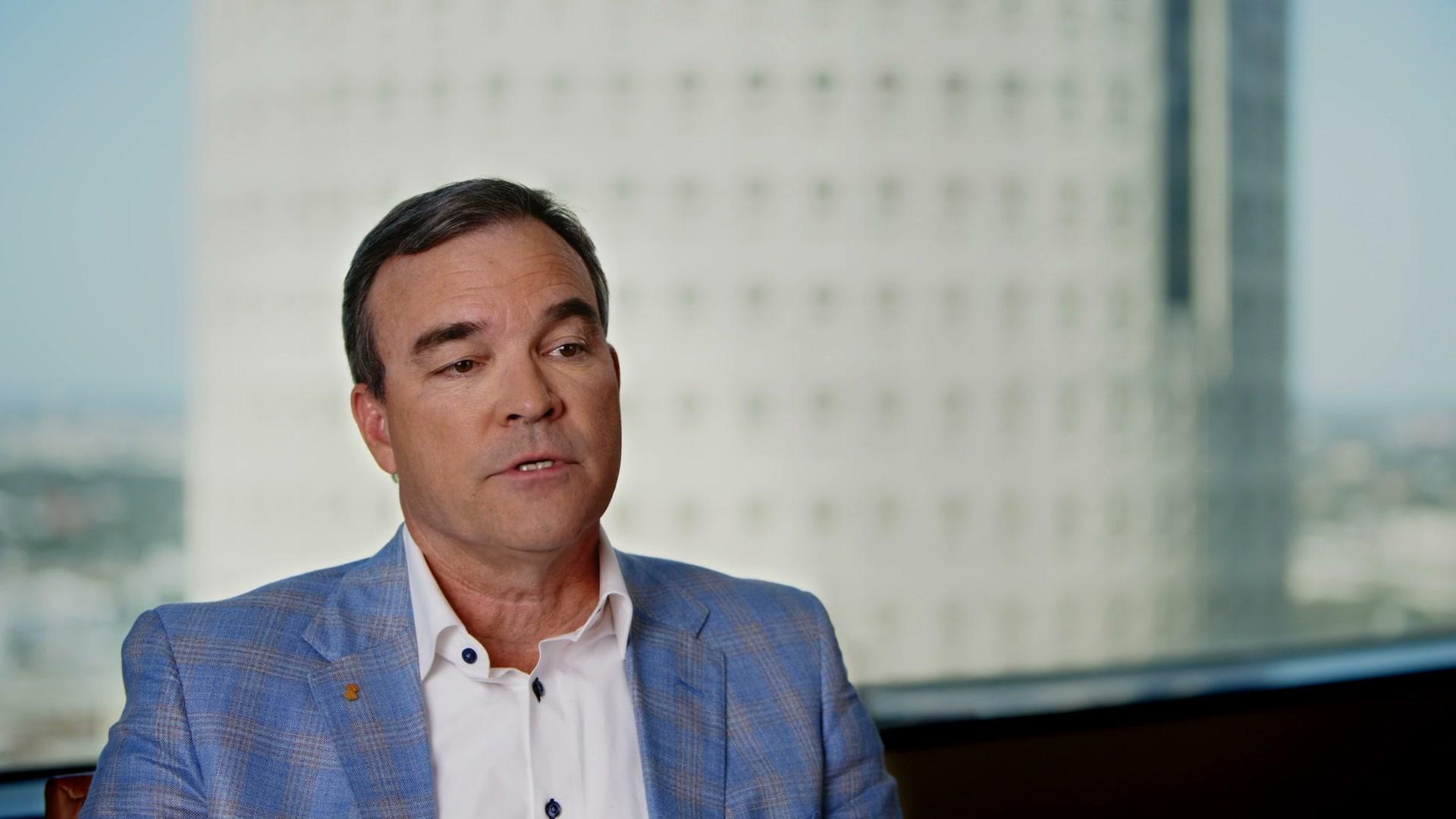
People choose a manager as much as a company. A manager spotlight is a 60- to 90-second interview with a branch or department leader about how they run their team.
A short series of manager spotlights does double duty. It introduces the branch to the community and shows candidates who they would work for.
Questions that get good answers:
- What does a great first 90 days look like on your team?
- What do you look for when you hire?
- Tell me about someone you hired who grew into a bigger role.
- What is your branch known for in the neighborhood?
Career path stories
Career path stories are the strongest answer to "is there a future here?" Find employees who started on the teller line or in customer service and now lead a branch, underwrite loans or run a department. Let them tell it chronologically, then cut it to 60 seconds with simple on-screen titles for each role and year.
Celebrate the small steps too. Grand Bank in Hattiesburg, Mississippi, features employees' work anniversaries on its social channels, according to ICBA's Independent Banker. Anniversaries and promotions are quick, cheap to produce and easy for employees to share. Our list of 25 social video ideas for banks includes several more.
Internship programs
Internship videos recruit twice: they attract next year's interns and they show every other candidate that the institution invests in people.
Film the cohort at three moments. Week one, when everything is new. Midsummer, on the projects they own. The final presentation, with a short reflection from each intern. Cut a two-minute story for your careers page and campus partners, plus vertical clips for the interns to post themselves. College career fairs are a good place to loop the result on a screen at your table.
Where to post recruiting videos
Post every recruiting video in more than one place, and cut it for each.
| Where | What to post | Format |
|---|---|---|
| Careers page | The anchor culture video and every spotlight | Horizontal, 1 to 2 minutes |
| Career paths, manager spotlights, day in the life | Vertical or square, captions on | |
| Instagram and TikTok | Day in the life, anniversaries, intern takeovers | Vertical, 15 to 60 seconds |
| Job postings | A link to the most relevant role's video | Horizontal or vertical |
| Career fairs and campus visits | Internship film and day in the life | Horizontal, looped, captions on |
| Offer and onboarding emails | A welcome from the new hire's manager | Short and personal |
Ask employees to share from their own accounts. Their networks are full of people like them. Captions matter everywhere, because a lot of scrolling happens with the sound off.
How we film in branches without disrupting customers
A working branch is a live set, and the customer always comes first. This is how we keep it that way:
- Film around the business day. We schedule the bulk of the shoot before opening, after close or on a day the branch is closed, and save open hours for a few short, planned moments.
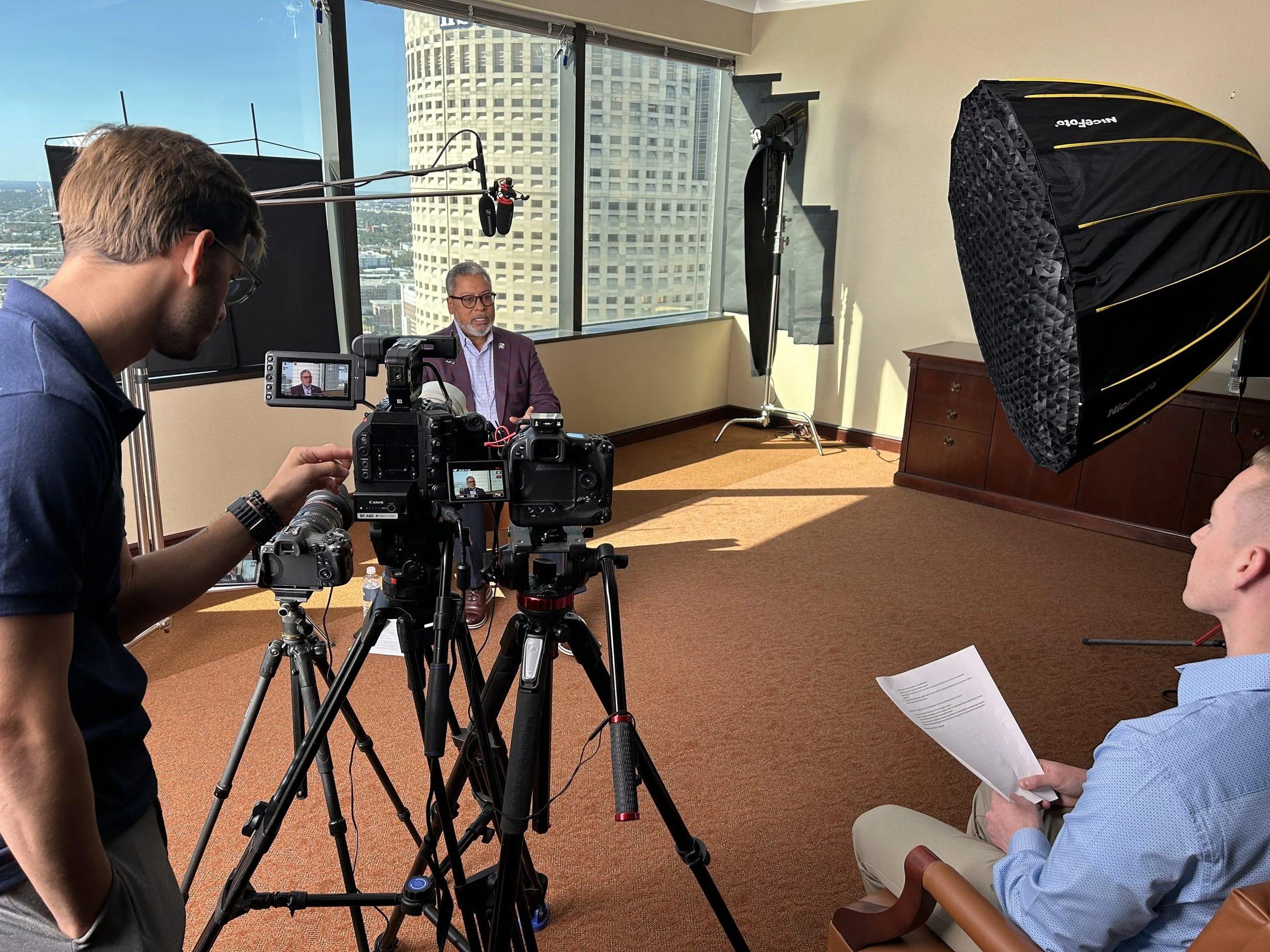
- Keep the crew small. For a branch shoot, that usually means a director, a camera operator and an audio and lighting tech, with compact cinema cameras and battery-powered lights instead of large stands.
- Mic the talent, not the room. Wireless lavalier mics let employees talk at a normal volume, so nobody has to quiet the lobby.
- Protect privacy. No customer faces without a signed release, and no screens, statements or paperwork in frame. We check each shot before we roll.
- Coordinate security. Your security team approves where cameras can point. Vaults, cash handling and alarm panels stay off camera.
- Post a notice. A simple sign at the door lets customers know filming is happening and how to avoid it.
The same crew mindset carries over from conferences, where we regularly work in crowded rooms without stopping the event. At E-Scrap 2025, one Big Wave crew delivered 500+ edited event photos, six full-length session and plenary videos and 15 greenroom interviews in three days while the conference ran around them. If you also need fresh team portraits, we can set up our mobile corporate headshots studio in a conference room on the same day. For the internal prep list, see how to prepare for a corporate video shoot.
Keep it honest and reviewed
Recruiting video is a promise about the job. Do not imply pay, schedules or promotion timelines you cannot guarantee for every hire, and let HR and legal review the cut. Feature the real workforce across roles, branches and tenure. When an employee leaves, follow the policy you set at the start, whether that means keeping the video up or retiring it.
Help candidates see the job
Start with the role that is hardest to fill: one day-in-the-life video and one manager spotlight for that job, planned so most of the filming happens before the branch opens. Big Wave Productions produces recruiting and culture videos for banks, and can cover several branches on the same trip. Book a free discovery call with Brian, call or text 407.498.5980, or email brian@meetbigwave.com.
Sources
- U.S. Bureau of Labor Statistics, Occupational Outlook Handbook: Tellers, projections for 2025 to 2035 and median wage for May 2025.
- Elizabeth Judd, "The Future of Marketing for Community Banks", ICBA Independent Banker, March 1, 2026.