The short answer
Count the moments you need covered at the same time, not the attendees. A single-track meeting of a few hundred people often needs one photographer. Add a second when breakouts run concurrently, the expo hall is large, or days run from breakfast into evening events. Add a dedicated headshot photographer for an open lounge, and a video crew for video.
You need one photographer for every place you want covered at the same time, plus extra hands for long days and same-day delivery. Attendee count matters less than how many things happen at once. When Big Wave Productions staffs a conference, we start by mapping the agenda room by room, and you can do the same math for your event with the worksheet at the end of this guide.
The rule: count simultaneous moments
A photographer can be in one room at a time. If your opening keynote, the expo hall opening and a VIP breakfast all happen at 8:30 a.m., that is three places at once. It makes no difference if 400 or 4,000 people are registered.
Start with the agenda and mark every block where more than one thing needs coverage. The highest number of overlapping must-cover moments is your starting headcount. Everything else in this guide adjusts that number up or down.
A staffing starting point
This table is a planning starting point, not a formula. Adjust it for your agenda.
| Conference profile | Photographers | Add more when |
|---|---|---|
| Up to about 300 attendees, single track, small expo | 1 | Evening events run late, or you want same-day photo batches |
| 300 to 1,000 attendees, 2 or 3 concurrent breakouts | 2 | Sponsors expect booth-by-booth coverage |
| 1,000 to 3,000 attendees, multiple tracks, full expo hall | 2 to 3 | Several stages run at once, or there is an offsite event |
| 3,000+ attendees, multi-day, large expo, many tracks | 3 or more | Each stage, the expo and VIP events need their own coverage |
Headshot lounges and video are separate roles with their own staffing. More on both below.
Concurrent sessions
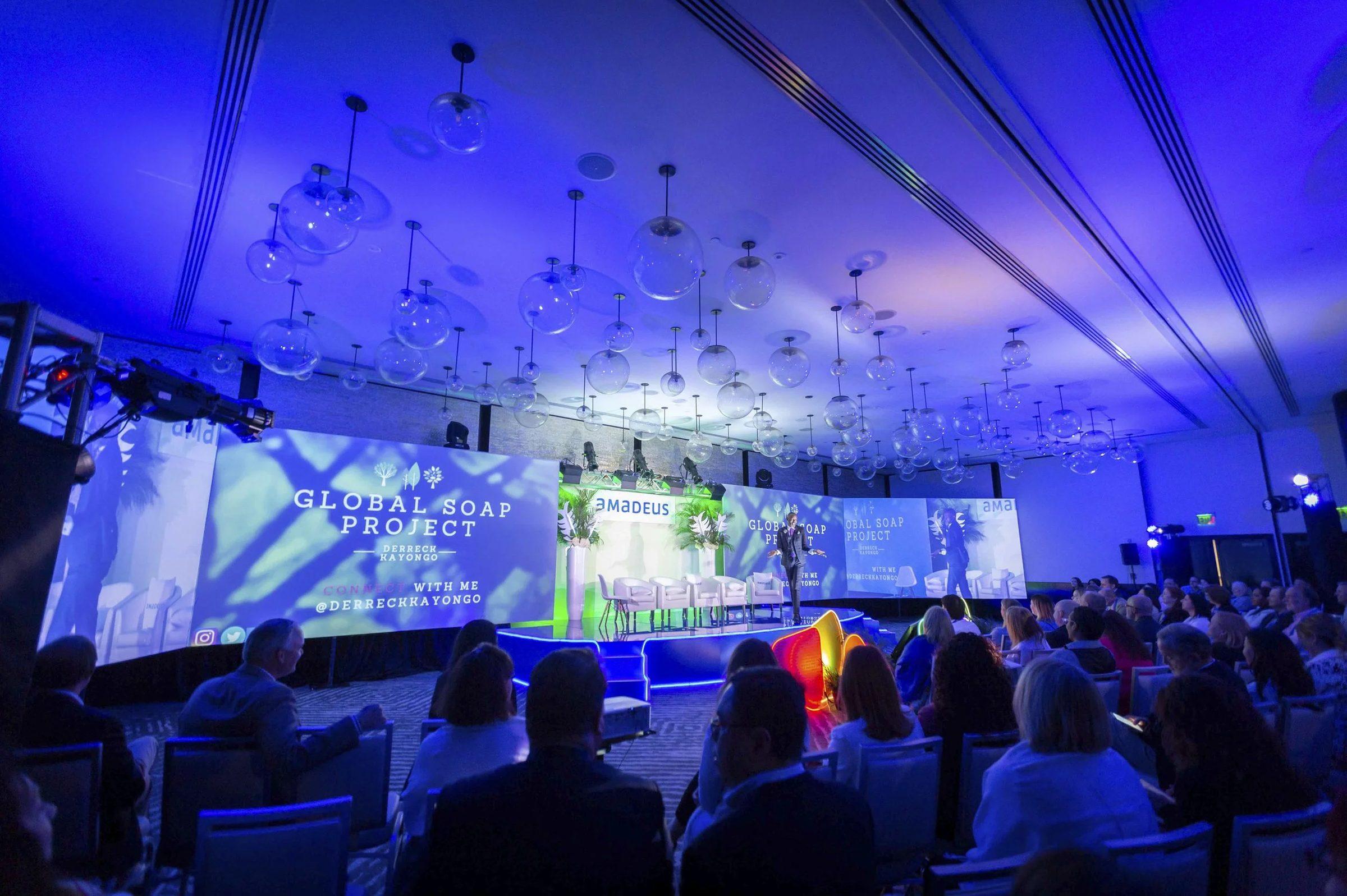
Concurrent breakouts are the most common reason a conference needs a second photographer. With four breakouts running at once, one photographer can either rotate through every room for a few minutes each or stay in the priority sessions and skip the rest. Both are legitimate choices. What matters is deciding before the event:
- Which sessions are must-cover: keynotes, sponsored sessions, award presentations.
- Which sessions need only a few frames each: most breakouts.
- Which sessions can be skipped entirely.
Sponsored sessions belong on the must-cover list, because the sponsor will ask for photos. So do sessions with a speaker your marketing team plans to feature next year.
Expo hall size
Sponsors and exhibitors expect proof of their presence: their booth, their logo, and attendees talking with their team. A small tabletop expo can be covered in one pass during each break. A large hall with dozens or hundreds of booths needs a dedicated pass, booth by booth, working from the sponsor list with booth numbers.
If sponsor photo deliverables are written into your prospectus, plan a photographer whose job during expo hours is the hall and nothing else. Otherwise the hall gets whatever time is left between sessions, and some sponsors get nothing.
Long days, evening events and offsites
A conference day often runs from an early breakfast to a late reception. One photographer can shoot that, but evening coverage suffers when they have been on their feet since dawn. A second photographer lets you split shifts, so someone fresh covers the reception and the awards.
Offsites need their own plan. A golf outing, a plant tour or a dinner across town pulls a photographer away from the venue for hours, including the drive. If an offsite overlaps with anything on site, that is another simultaneous moment to count, plus travel time between the two.
When to add a second shooter
Add a second photographer when any of these are true:
- Two or more must-cover moments overlap anywhere on the agenda.
- The expo hall needs dedicated sponsor coverage while sessions are running.
- Days run longer than one photographer can shoot well.
- You want same-day photo batches while coverage continues. Someone has to edit while someone else shoots.
- An offsite or VIP event happens at the same time as the main program.
Same-day delivery is the one organizers most often forget to staff. At conferences, Big Wave delivers batches of edited photos the same day, and that only works when editing is planned into the crew. Our guide to event photography deliverables covers how many photos to expect and how fast.
When to add a headshot photographer
A headshot lounge is a fixed station. The photographer cannot leave it to cover a keynote, so an attendee lounge with open hours needs its own photographer.
For small groups, such as staff, the same crew can make it work. At Resource Recycling's conferences, Big Wave photographs on-site staff headshots as part of the event coverage. For a full attendee lounge, plan dedicated corporate headshots coverage and consider a sponsor. Many organizers sell the headshot lounge as a sponsorship, and the sponsorship can often more than cover the cost of the photographer.
When to add a video crew
Photographers capture stills. If you want recap films, session recordings, interviews or social video, you need a video crew too. The most efficient setup is one team that handles both, sharing a shot list, travel and a producer.
At E-Scrap 2025 in Grapevine, Texas, the same Big Wave crew that delivered 500+ edited event photos over three days also produced the recap film, the session videos, the greenroom interviews and three same-day recaps. Photo and video still need their own people within a crew like that, but one plan keeps them from chasing the same moment. See how that coverage is planned on our conference video production page.
Run the photographers as one team
Two or three photographers without a plan will all end up in the keynote. Treat them as one team:
- Assign zones. One photographer owns the main stage, another owns the expo hall and breakouts, a third floats.
- Name a lead. One person coordinates with your on-site contact and moves people when the schedule changes.
- Share one shot list. Every must-get moment has a name next to it.
- Check in at breaks. A two-minute huddle catches gaps before they become missing photos.
- Match the look. Agree on style and editing so the final library reads as one set.
Signs you were understaffed last year
Look at last year's photos with this list. Any of these suggests you need more coverage, or a better plan for the coverage you had:
- Sponsors asked for booth photos you did not have.
- The awards dinner has a handful of dark, rushed frames.
- Every keynote photo is from the same angle.
- There are almost no candid networking shots.
- Same-day photos were promised but arrived the following week.
- Whole tracks of breakouts have no photos at all.
A quick staffing worksheet
- List every agenda block with its room and time.
- Mark each block as must-cover, a few frames, or skip.
- Find the busiest overlap. That number is your base photographer count.
- Add one if the expo hall needs dedicated sponsor coverage.
- Add one for very long days or same-day photo delivery, if needed.
- Add a headshot photographer for an open lounge.
- Add video as its own crew, or ask for one crew that covers both.
If budget is the limit, cut low-priority blocks before you cut people from overlapping must-cover moments. A missed sponsor session is harder to explain than a breakout with fewer frames. We cover the money side in how much conference photography and video cost.
Plan your conference photo coverage
Send us the agenda with room names and times, and we will mark the overlaps and tell you how many photographers it takes. Start with our event photography page, then book a discovery call with Brian. If you would rather talk it through by phone, call or text the office at 407.498.5980.